
The Vibratory Mill Selection Guide for Advanced Industries » Vibratory Mills by Material » Vibratory Mill for Zirconia
Vibratory Mill for Zirconia
Zirconia is valued in dental restorations, fuel cell electrolytes, and precision components for a toughness that most technical ceramics do not have. That same toughness, driven by a phase transformation that absorbs impact energy, makes zirconia behave differently under grinding than more brittle ceramics. This article explains how vibratory mills grind zirconia to a fine, consistent particle size while keeping its phase stability intact.
Why Zirconia's Toughness Changes the Grinding Approach
Most technical ceramics fracture cleanly when struck with enough force, which is what makes them straightforward to reduce to fine powder. Zirconia resists this: its crystal structure absorbs impact energy through a stress-induced phase change instead of simply cracking, which is also the mechanism behind its high fracture toughness in finished parts.
Because a single high-energy impact is less effective against zirconia than against a brittle ceramic, the sustained, high-frequency impact of a vibratory mill grinds zirconia more efficiently than methods built around fewer, harder strikes. Repeated moderate impacts wear down particle size steadily without wasting energy on impacts the material simply absorbs.
Controlling Phase Stability During Fine Grinding
The same mechanical stress that grinds zirconia down can also push some of it through an unwanted phase change, from the tetragonal structure that gives zirconia its toughness toward a monoclinic structure that is more brittle and prone to microcracking.
Keeping this transformation to a minimum during grinding means controlling impact intensity and processing time rather than maximizing grinding speed at any cost. A mill that lets you tune vibration amplitude and frequency independently gives more control over this balance than equipment with a fixed grinding action, which matters most for yttria-stabilized zirconia used in load-bearing or high-reliability parts.
Contamination Control for Dental
and Fuel Cell Applications
Zirconia's contamination requirements shift with the application. Dental-grade zirconia has to stay free of metal contamination that could trigger a biological reaction inside the body, while fuel cell electrolytes need purity high enough that trace impurities do not interfere with oxygen ion conduction at operating temperature.
Vibratory mills address both through lining and media selection: alumina, zirconia, or urethane linings keep metal contamination out, and autogenous grinding with zirconia media is the standard approach when even trace foreign material is unacceptable.
Wet and Dry Processing for Zirconia Powders
| Wet Processing | Produces the uniform, well-dispersed slurry needed for slip casting dental crowns and other precision parts where surface finish and dimensional accuracy matter most. |
|---|---|
| Dry Processing | Suits larger structural or industrial zirconia components where dry pressing is the standard forming route and eliminating a drying step simplifies the process. |
Precision and dental applications generally favor wet processing for the finish it delivers, while fuel cell and industrial components more often move through dry routes.
Applications in Dental, Fuel Cells,
and Precision Components
Dental laboratories and restoration manufacturers grind zirconia into crowns, bridges, and implant abutments that need to match the strength of natural teeth while staying biocompatible. Solid oxide fuel cell makers grind zirconia electrolytes that must conduct oxygen ions efficiently at high operating temperatures without cracking under thermal cycling.
Precision component manufacturers use the same fine-ground zirconia for valve parts, pump seals, and instrumentation components where toughness under repeated stress matters more than raw hardness.
Choosing a Vibratory Mill for Zirconia Processing
Zirconia grinding is less about brute grinding force and more about working with a material that resists fracture through phase transformation. Vibratory mills fit this well, delivering steady high-frequency impact that grinds efficiently while adjustable amplitude and frequency keep unwanted phase change and contamination under control.
CHECK
Find the Right Vibratory Mill
for Your Material
for Your Material
The right vibratory mill varies depending on the difficult-to-grind material, such as SiC or fine ceramics.
This article reviews the specifications of vibratory mills for mass production and their industry-specific applications. It compares vibratory mills suited to each material based on differences in available lining materials, grinding media, and processing capacity. Please refer to this article when selecting the right grinding machine.
3 Recommended Vibratory Mills
by Material
by Material
Grinding Hard Metals
and Ceramics
For Electronic Materials and
Semiconductor Materials
and Ceramics
For Electronic Materials and
Semiconductor Materials
Model CD Vibration Mill
CHUO KAKOHKI
CHUO KAKOHKI
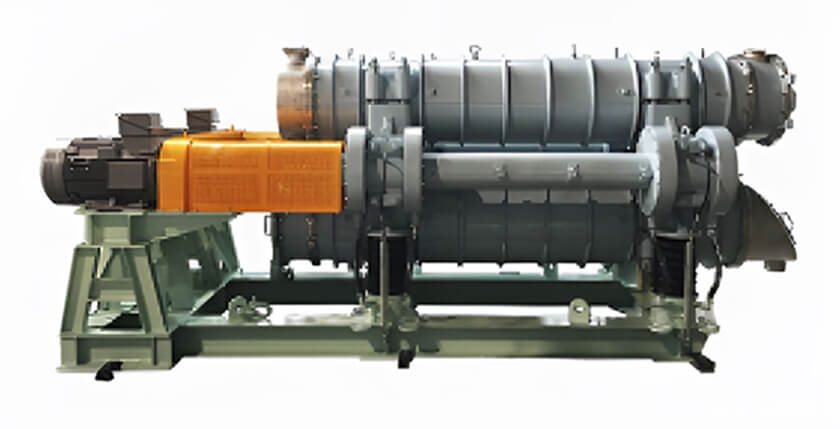
Source: CHUO KAKOHKI Official Website
(https://chuokakohki.com/products/mills)
Grinding Features
Designed for submicron grinding of advanced ceramics and electronic materials, including hard-to-grind SiC, with metal-free configuration options for high-purity processing. High-G impact energy enables both submicron grinding and mechanochemical processing, supporting advanced material development and alloy synthesis.
Maintenance Features
Unavoidable bearing replacement can be completed by simply swapping in a spare vibrator unit. This allows operation to resume quickly with minimal downtime.
- Pot Volume
- 17.2–803.2 gal (65–3,040 L)
- Media
- Steel, stainless steel, alumina, nylon
- Lining
- Steel, stainless steel, alumina, zirconia, rubber (polyurethane, NBR), nylon
- Process Type
- Dry / wet
- Operation Mode
- Continuous
- Laboratory
Test Model - Available
Show More
Grinding Battery Materials
and Carbon
For EV and
Energy Storage Production
and Carbon
For EV and
Energy Storage Production
Heavy-duty Vibration Grinders
Xiamen Tmax Battery Equipments
Xiamen Tmax Battery Equipments
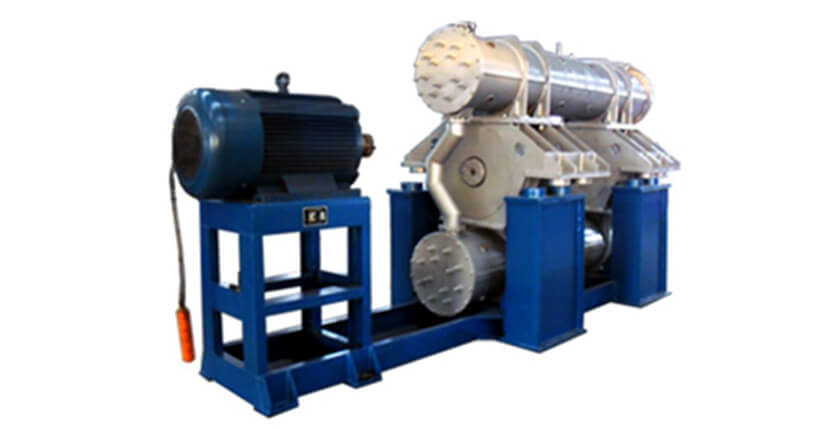
Source: TMAX Official Website
(https://www.tmaxcn.com/heavy-duty-vibration-grinder-for-large-scale-production_p3540.html)
Grinding Features
Supports contamination-controlled grinding for battery materials using low-cost metal-free liner and media options. Polyurethane lining combined with ceramic media such as alumina prevents metal contamination without the need for expensive ceramic liners.
Maintenance Features
It includes unlimited online technical support, helping users build a self-maintenance and servicing system while receiving technical guidance from the manufacturer.
- Pot Volume
- 26.4–317.0 gal (100–1,200 L)
- Media
- Zirconia, alumina, silicon nitride, agate, crystal glass, stainless steel, tungsten, high-wear-resistant steel, manganese steel, carbon steel, hard metal, cemented carbide, polyurethane balls, nylon, and more
- Lining
- Stainless steel, ceramic, zirconia, glazed block, nylon, PTFE, food-standard rubber, polyurethane
- Process Type
- Dry / wet
- Operation Mode
- Continuous
- Laboratory
Test Model - Available
Show More
Grinding Hard Scrap
and Industrial Waste
For Industrial Recycling and
Waste Processing
and Industrial Waste
For Industrial Recycling and
Waste Processing
Eccentric Vibrating Mills
SIEBTECHNIK TEMA
SIEBTECHNIK TEMA
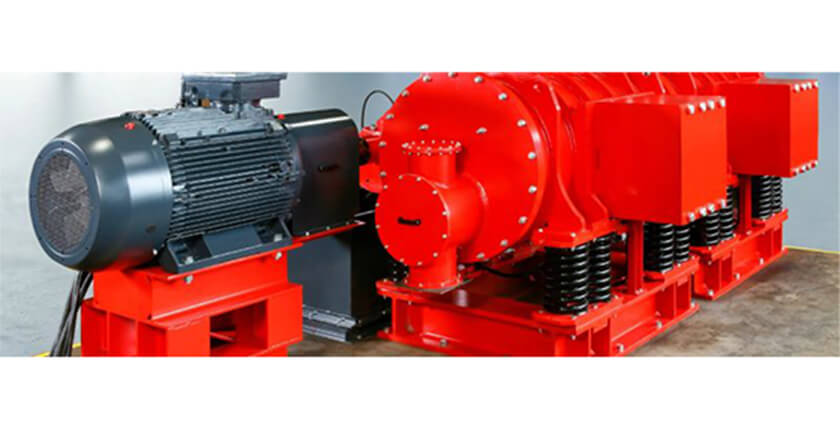
Source: SIEBTECHNIK TEMA Official Website
(https://www.siebtechnik-tema.com/unit_operation/eccentric-vibrating-mills/)
Grinding Features
Built for heavy-duty grinding of hard scrap and difficult industrial materials, including carbide waste and asbestos processing. It enables efficient recycling of tungsten and cemented carbide, and uses impact and heat to break down asbestos into fiber-free raw material.
Maintenance Features
For easier maintenance, the main drive components are installed outside the grinding cylinder, reducing the labor required for inspection and parts replacement.
- Pot Volume
- 2.9–502.5 gal (11–1,902 L)
- Media
- Steel, cemented carbide, ceramic, and more
- Lining
- Special steel, ceramic, rubberized
- Process Type
- Not specified on the official website
- Operation Mode
- Continuous / batch / automated batch
- Laboratory
Test Model - Available
Show More
*Source: TMAX Official Website (https://www.tmaxcn.com/1-100l-optional-vibrating-ball-mill-machine_p1778.html)
*Source: SIEBTECHNIK TEMA Official Website (https://www.siebtechnik-tema.com/unit_operation/eccentric-vibrating-mills/)
*Source: SIEBTECHNIK TEMA Official Website [PDF] (https://www.siebtechnik-tema.com/wp-content/uploads/2023/03/wb238e_Exzenterschwing_2025-1.pdf)
*Source: SIEBTECHNIK TEMA Official Website (https://www.siebtechnik-tema.com/unit_operation/eccentric-vibrating-mills/)
*Source: SIEBTECHNIK TEMA Official Website [PDF] (https://www.siebtechnik-tema.com/wp-content/uploads/2023/03/wb238e_Exzenterschwing_2025-1.pdf)