
The Vibratory Mill Selection Guide for Advanced Industries » Vibratory Mills by Material » Vibratory Mill for Additive Manufacturing Metal Powder
Vibratory Mill for Additive Manufacturing Metal Powder
A metal powder's build quality in additive manufacturing depends on how freely it flows through the printer's recoating system, not only on the alloy itself, and reactive metals such as titanium lose that quality fast if oxygen gets in during processing. This article explains how vibratory mills condition powder shape for better flowability, protect reactive metals from oxygen pickup, and support both custom alloy development and powder reclamation.
Why Vibratory Mills Improve Metal Powder Flowability
Metal powder coming out of atomization is not always print-ready. Small satellite particles stick to larger ones, and irregular, angular shapes catch on each other instead of flowing smoothly across the build plate.
Vibratory mills apply gentle, repeated mechanical impact that knocks satellites loose and rounds sharp edges without breaking the powder down into finer particles, which is a different job than the fine grinding vibratory mills do for ceramic or battery materials.
Oxygen Control for Reactive Metals Like Titanium
Titanium and nickel-based superalloys like Inconel react with oxygen and nitrogen in the air, and even a small amount of pickup during processing can embrittle the finished part or introduce defects that only show up after the part is in service.
A vibratory mill with a sealed chamber and inert gas purging keeps titanium and Inconel powder isolated from ambient air throughout conditioning, protecting the same oxygen-sensitive chemistry that makes these alloys valuable for high-performance parts in the first place.
Mechanical Alloying for Custom AM Feedstock
Some AM applications call for an alloy composition that is not commercially available as a pre-atomized powder, and mechanical alloying offers a way to build that composition without a separate melting step.
Vibratory mills drive this process by repeatedly welding and fracturing powder particles together under sustained impact, which distributes alloying elements evenly at the particle level before the material ever reaches the printer.
Reclaiming and Reconditioning Powder for Reuse
Titanium and Inconel powder are expensive enough that reclaiming unused powder from a build chamber is a real cost consideration, not just a sustainability talking point.
Reclaimed powder often needs the same shape conditioning as virgin powder before it flows reliably again, and a continuous-type vibratory mill processes this at a scale that matches the volume a busy AM operation actually reclaims, rather than treating reclamation as a slow, batch-by-batch task.
Applications in Aerospace and Medical Additive Manufacturing
Aerospace manufacturers print titanium structural components and Inconel turbine parts where both material cost and part reliability make powder quality control worth the investment. Medical device makers use the same titanium powder conditioning for implants where biocompatibility and consistent mechanical properties are non-negotiable.
In both fields, powder that flows consistently print after print is what keeps build quality repeatable across a production run rather than varying from one build to the next.
Selecting a Vibratory Mill for AM Powder Processing
AM metal powder succeeds or fails on flowability and freedom from oxygen pickup, not on being ground finer. Vibratory mills address this through gentle shape conditioning, sealed inert-gas processing for reactive metals, and the ability to mechanically alloy or reclaim powder at production volume.
CHECK
Find the Right Vibratory Mill
for Your Material
for Your Material
The right vibratory mill varies depending on the difficult-to-grind material, such as SiC or fine ceramics.
This article reviews the specifications of vibratory mills for mass production and their industry-specific applications. It compares vibratory mills suited to each material based on differences in available lining materials, grinding media, and processing capacity. Please refer to this article when selecting the right grinding machine.
3 Recommended Vibratory Mills
by Material
by Material
Grinding Hard Metals
and Ceramics
For Electronic Materials and
Semiconductor Materials
and Ceramics
For Electronic Materials and
Semiconductor Materials
Model CD Vibration Mill
CHUO KAKOHKI
CHUO KAKOHKI
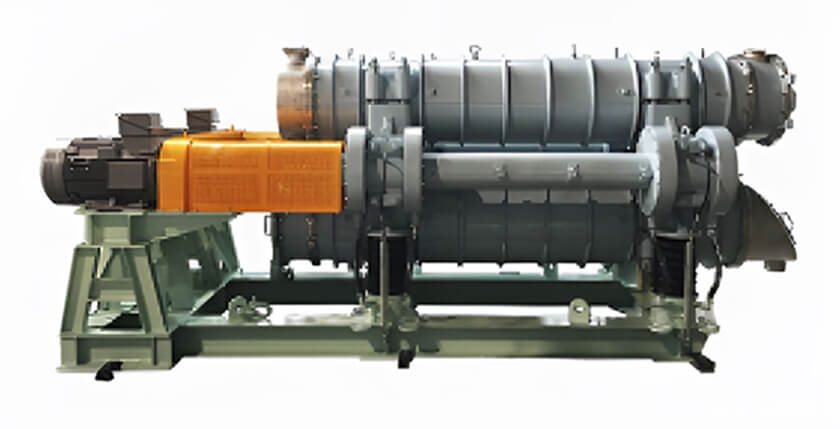
Source: CHUO KAKOHKI Official Website
(https://chuokakohki.com/products/mills)
Grinding Features
Designed for submicron grinding of advanced ceramics and electronic materials, including hard-to-grind SiC, with metal-free configuration options for high-purity processing. High-G impact energy enables both submicron grinding and mechanochemical processing, supporting advanced material development and alloy synthesis.
Maintenance Features
Unavoidable bearing replacement can be completed by simply swapping in a spare vibrator unit. This allows operation to resume quickly with minimal downtime.
- Pot Volume
- 17.2–803.2 gal (65–3,040 L)
- Media
- Steel, stainless steel, alumina, nylon
- Lining
- Steel, stainless steel, alumina, zirconia, rubber (polyurethane, NBR), nylon
- Process Type
- Dry / wet
- Operation Mode
- Continuous
- Laboratory
Test Model - Available
Show More
Grinding Battery Materials
and Carbon
For EV and
Energy Storage Production
and Carbon
For EV and
Energy Storage Production
Heavy-duty Vibration Grinders
Xiamen Tmax Battery Equipments
Xiamen Tmax Battery Equipments
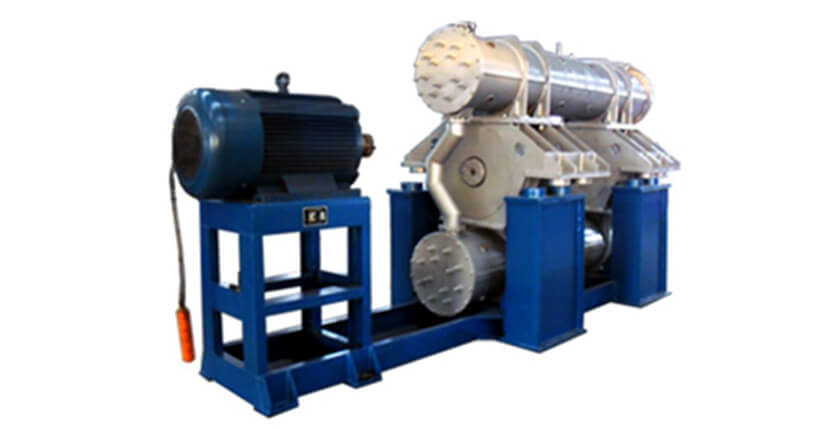
Source: TMAX Official Website
(https://www.tmaxcn.com/heavy-duty-vibration-grinder-for-large-scale-production_p3540.html)
Grinding Features
Supports contamination-controlled grinding for battery materials using low-cost metal-free liner and media options. Polyurethane lining combined with ceramic media such as alumina prevents metal contamination without the need for expensive ceramic liners.
Maintenance Features
It includes unlimited online technical support, helping users build a self-maintenance and servicing system while receiving technical guidance from the manufacturer.
- Pot Volume
- 26.4–317.0 gal (100–1,200 L)
- Media
- Zirconia, alumina, silicon nitride, agate, crystal glass, stainless steel, tungsten, high-wear-resistant steel, manganese steel, carbon steel, hard metal, cemented carbide, polyurethane balls, nylon, and more
- Lining
- Stainless steel, ceramic, zirconia, glazed block, nylon, PTFE, food-standard rubber, polyurethane
- Process Type
- Dry / wet
- Operation Mode
- Continuous
- Laboratory
Test Model - Available
Show More
Grinding Hard Scrap
and Industrial Waste
For Industrial Recycling and
Waste Processing
and Industrial Waste
For Industrial Recycling and
Waste Processing
Eccentric Vibrating Mills
SIEBTECHNIK TEMA
SIEBTECHNIK TEMA
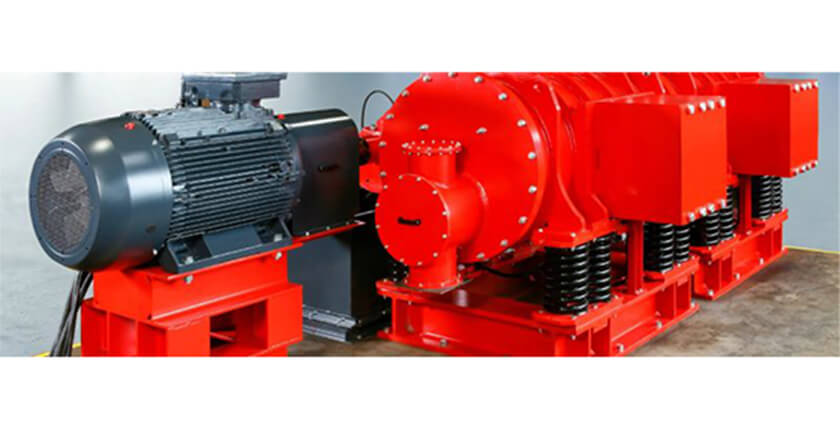
Source: SIEBTECHNIK TEMA Official Website
(https://www.siebtechnik-tema.com/unit_operation/eccentric-vibrating-mills/)
Grinding Features
Built for heavy-duty grinding of hard scrap and difficult industrial materials, including carbide waste and asbestos processing. It enables efficient recycling of tungsten and cemented carbide, and uses impact and heat to break down asbestos into fiber-free raw material.
Maintenance Features
For easier maintenance, the main drive components are installed outside the grinding cylinder, reducing the labor required for inspection and parts replacement.
- Pot Volume
- 2.9–502.5 gal (11–1,902 L)
- Media
- Steel, cemented carbide, ceramic, and more
- Lining
- Special steel, ceramic, rubberized
- Process Type
- Not specified on the official website
- Operation Mode
- Continuous / batch / automated batch
- Laboratory
Test Model - Available
Show More
*Source: TMAX Official Website (https://www.tmaxcn.com/1-100l-optional-vibrating-ball-mill-machine_p1778.html)
*Source: SIEBTECHNIK TEMA Official Website (https://www.siebtechnik-tema.com/unit_operation/eccentric-vibrating-mills/)
*Source: SIEBTECHNIK TEMA Official Website [PDF] (https://www.siebtechnik-tema.com/wp-content/uploads/2023/03/wb238e_Exzenterschwing_2025-1.pdf)
*Source: SIEBTECHNIK TEMA Official Website (https://www.siebtechnik-tema.com/unit_operation/eccentric-vibrating-mills/)
*Source: SIEBTECHNIK TEMA Official Website [PDF] (https://www.siebtechnik-tema.com/wp-content/uploads/2023/03/wb238e_Exzenterschwing_2025-1.pdf)