
The Vibratory Mill Selection Guide for Advanced Industries » Vibratory Mills by Material
Vibratory Mills by Material
Index
Show More
In new material development and electronic component manufacturing, each material presents its own challenges. Vibratory mills are versatile grinding machines that can be customized to appropriate specifications to handle a wide range of materials.
This article provides an overview of vibratory mills used for specific purposes.
Features of Vibratory Mills
for Ceramics
In the production of fine ceramics such as alumina and zirconia, metal contamination and variations in particle size are factors that can reduce quality. Changing the material of the inner drum wall, a material-contact part, is an effective solution.
Vibratory mills for ceramics can eliminate metal contamination by using lining materials such as alumina and zirconia, or resins including urethane. In addition, the strong dispersion capability of vibratory mills helps break up agglomerates that form in the raw powder before sintering.
Features of Vibratory Mills
for Silicon Carbide (SiC)
Silicon carbide, which is in rapidly growing demand for power semiconductors and heat-dissipation materials, has a Mohs hardness of 9 or higher. It is recognized as one of the most typical difficult-to-grind materials in which contamination from wear is unavoidable.
Vibratory mills for silicon carbide are equipped with high-frequency impact and grinding action. They can efficiently create cracks in hard silicon carbide particles and grind them to the submicron range at speeds approximately 10 to 20 times those of rotary mills.
Features of Vibratory Mills
for Advanced Ceramics
Advanced ceramics used in semiconductor, aerospace, and energy applications require a level of purity and particle uniformity that standard industrial ceramics do not need, and even trace metal contamination can affect device yield or component life.
Vibratory mills grind advanced ceramics into the submicron and nano range through high-frequency impact, and flexible lining and media selection keeps contamination low enough for purity-critical applications.
Features of Vibratory Mills
for Technical Ceramics
Mechanical seals, bearings, and cutting tools depend on technical ceramics ground to a precise, consistent particle size, since even minor inconsistencies shorten part life under constant friction and load.
Vibratory mills apply high-frequency impact to grind hard technical ceramics efficiently, and tuning vibration amplitude and frequency gives tighter control over particle size distribution than conventional ball mills.
Features of Vibratory Mills
for Aluminum Nitride
Aluminum nitride's high thermal conductivity makes it a standard choice for power electronics and LED substrates, but it also reacts with moisture, which gradually lowers the thermal conductivity it is chosen for.
Vibratory mills reach fine, submicron particle sizes through dry processing, avoiding the added moisture exposure of wet grinding while keeping metal contamination low enough for electronic-grade substrates.
Features of Vibratory Mills
for Zirconia
Zirconia's toughness comes from a phase transformation that absorbs impact energy, which is what gives dental, fuel cell, and precision components their durability, but it also changes how the material behaves under grinding.
Vibratory mills grind zirconia efficiently through sustained high-frequency impact, and adjustable amplitude and frequency help limit the unwanted phase change that can compromise toughness in the finished part.
Features of Vibratory Mills
for Alumina
Alumina spans a wide range of purity grades, from low-cost industrial insulators to 99.5%-plus electronic substrates, and the right grinding approach depends on which end of that range an application requires.
Vibratory mills scale the same high-frequency grinding process across this range, and matching lining and media to the target purity grade avoids overspending on contamination control that a given application does not need.
Features of Vibratory Mills
for Silicon Nitride
Silicon nitride's high strength, toughness, and thermal shock resistance make it a common choice for hybrid bearings, cutting tools, and semiconductor equipment parts, but its hardness makes it one of the hardest ceramics to grind efficiently.
Vibratory mills grind silicon nitride through sustained high-frequency impact and can co-grind sintering aids with the base powder, giving more uniform dispersion than blending them in separately.
Features of Vibratory Mills
for Electronic Materials
Capacitors, inductors, and sensors depend on electronic materials such as barium titanate and ferrite ground to a particle size that determines dielectric constant and magnetic permeability, not structural strength.
Vibratory mills reach the nano-scale particle sizes these materials need through high-frequency impact, and controlling particle surface energy helps them sinter at lower temperatures without shifting electrical or magnetic properties.
Features of Vibratory Mills
for Solid Electrolyte
Solid-state battery developers need solid electrolytes synthesized under conditions that keep moisture and air away from sulfide-based materials that react dangerously and lose ionic conductivity on exposure to either.
Vibratory mills support this through sealed, inert-gas-capable chambers that supply the mechanical energy mechanochemical synthesis needs while keeping the material isolated from ambient air.
Features of Vibratory Mills
for Graphite
Graphite anode material performs well or poorly based on particle shape more than on grinding away any real hardness, and battery makers need it reliably free of iron contamination that can compromise cell safety.
Vibratory mills apply multi-directional impact that rounds flake-shaped graphite particles for better packing density, while a sealed chamber contains the combustible dust graphite generates during processing.
Features of Vibratory Mills
for Battery Electrode Materials
Cathode and anode active materials often need a uniform carbon coating to reach the conductivity and cycle life a finished battery cell depends on, without the drying step a solvent-based coating process adds.
Vibratory mills apply dry mechanical coating for consistent thickness across a batch, and lining options scaled to the chemistry keep cost-sensitive production from paying for purity it does not need.
Features of Vibratory Mills
for Additive Manufacturing Metal Powder
Metal powder used in 3D printing needs to flow freely through a printer's recoating system, and reactive metals such as titanium lose that quality fast if oxygen gets in during processing.
Vibratory mills condition powder shape for better flowability and use sealed, inert-gas processing to protect oxygen-sensitive alloys, while supporting mechanical alloying and powder reclamation at production volume.
Features of Vibratory Mills
for Slag
Turning blast furnace slag into a cement replacement material takes more than reducing particle size. It requires breaking down the material's glassy structure enough to make it chemically reactive.
Vibratory mills combine grinding with this structural disruption in one process, and wear-resistant lining options keep the mill running through the high-volume, abrasive conditions construction material production demands.
Other Specific Purposes
The recycling grinding of cemented carbide scrap such as tungsten carbide is a typical application in which the characteristics of vibratory mills can be fully utilized. Another strength is the ability to grind fibrous materials such as woody biomass by cutting the fibers with strong impact force.
In addition, there is also an advanced method called mechanochemical processing, which uses vibrational energy to promote chemical reactions and surface modification during grinding.
Summary
This article has outlined the effectiveness of vibratory mills for difficult-to-grind materials such as fine ceramics and silicon carbide. By adjusting the lining material and grinding media according to the challenges presented by the material, vibratory mills can suppress contamination while achieving efficient fine grinding.
CHECK
Find the Right Vibratory Mill
for Your Material
for Your Material
The right vibratory mill varies depending on the difficult-to-grind material, such as SiC or fine ceramics.
This article reviews the specifications of vibratory mills for mass production and their industry-specific applications. It compares vibratory mills suited to each material based on differences in available lining materials, grinding media, and processing capacity. Please refer to this article when selecting the right grinding machine.
3 Recommended Vibratory Mills
by Material
by Material
Grinding Hard Metals
and Ceramics
For Electronic Materials and
Semiconductor Materials
and Ceramics
For Electronic Materials and
Semiconductor Materials
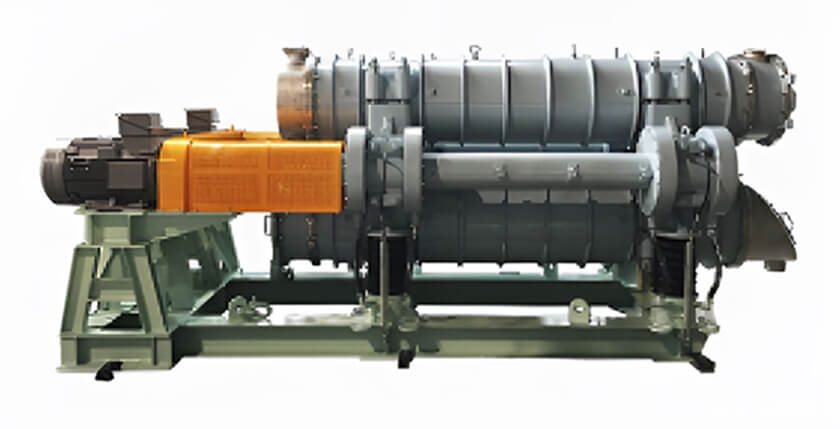
Model CD Vibration Mill
CHUO KAKOHKI
CHUO KAKOHKI
Source: CHUO KAKOHKI Official Website
(https://chuokakohki.com/products/mills)
Grinding Features
Designed for submicron grinding of advanced ceramics and electronic materials, including hard-to-grind SiC, with metal-free configuration options for high-purity processing. High-G impact energy enables both submicron grinding and mechanochemical processing, supporting advanced material development and alloy synthesis.
Maintenance Features
Unavoidable bearing replacement can be completed by simply swapping in a spare vibrator unit. This allows operation to resume quickly with minimal downtime.
- Pot Volume
- 17.2–803.2 gal (65–3,040 L)
- Media
- Steel, stainless steel, alumina, nylon
- Lining
- Steel, stainless steel, alumina, zirconia, rubber (polyurethane, NBR), nylon
- Process Type
- Dry / wet
- Operation Mode
- Continuous
- Laboratory
Test Model - Available
Show More
Grinding Battery Materials
and Carbon
For EV and
Energy Storage Production
and Carbon
For EV and
Energy Storage Production
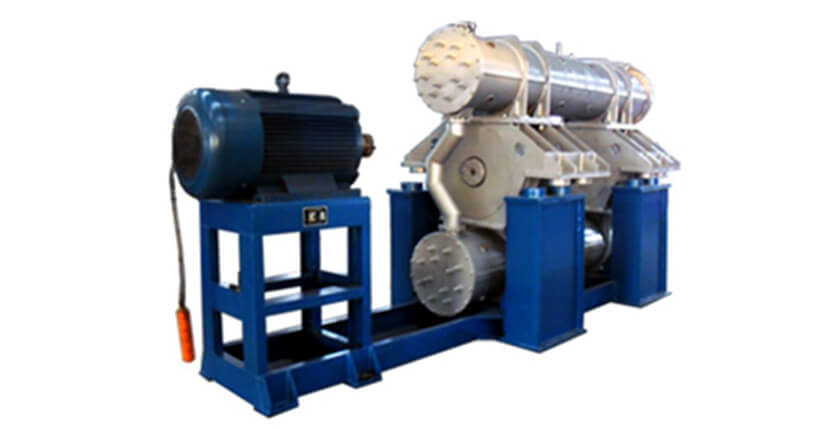
Heavy-duty Vibration Grinders
Xiamen Tmax Battery Equipments
Xiamen Tmax Battery Equipments
Source: TMAX Official Website
(https://www.tmaxcn.com/heavy-duty-vibration-grinder-for-large-scale-production_p3540.html)
Grinding Features
Supports contamination-controlled grinding for battery materials using low-cost metal-free liner and media options. Polyurethane lining combined with ceramic media such as alumina prevents metal contamination without the need for expensive ceramic liners.
Maintenance Features
It includes unlimited online technical support, helping users build a self-maintenance and servicing system while receiving technical guidance from the manufacturer.
- Pot Volume
- 26.4–317.0 gal (100–1,200 L)
- Media
- Zirconia, alumina, silicon nitride, agate, crystal glass, stainless steel, tungsten, high-wear-resistant steel, manganese steel, carbon steel, hard metal, cemented carbide, polyurethane balls, nylon, and more
- Lining
- Stainless steel, ceramic, zirconia, glazed block, nylon, PTFE, food-standard rubber, polyurethane
- Process Type
- Dry / wet
- Operation Mode
- Continuous
- Laboratory
Test Model - Available
Show More
Grinding Hard Scrap
and Industrial Waste
For Industrial Recycling and
Waste Processing
and Industrial Waste
For Industrial Recycling and
Waste Processing
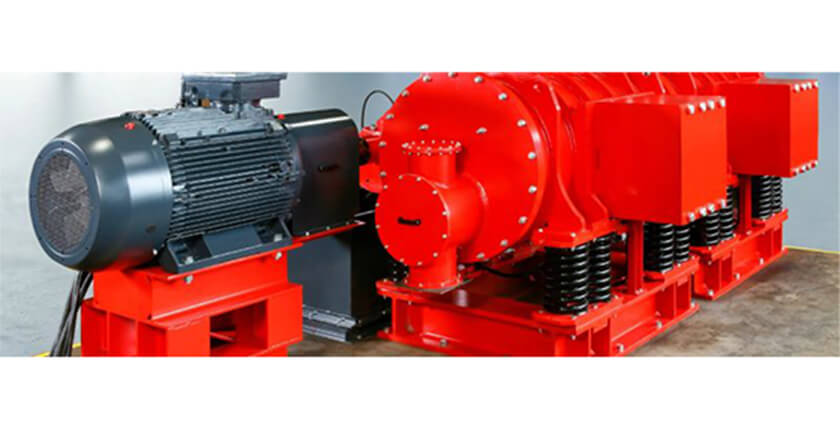
Eccentric Vibrating Mills
SIEBTECHNIK TEMA
SIEBTECHNIK TEMA
Source: SIEBTECHNIK TEMA Official Website
(https://www.siebtechnik-tema.com/unit_operation/eccentric-vibrating-mills/)
Grinding Features
Built for heavy-duty grinding of hard scrap and difficult industrial materials, including carbide waste and asbestos processing. It enables efficient recycling of tungsten and cemented carbide, and uses impact and heat to break down asbestos into fiber-free raw material.
Maintenance Features
For easier maintenance, the main drive components are installed outside the grinding cylinder, reducing the labor required for inspection and parts replacement.
- Pot Volume
- 2.9–502.5 gal (11–1,902 L)
- Media
- Steel, cemented carbide, ceramic, and more
- Lining
- Special steel, ceramic, rubberized
- Process Type
- Not specified on the official website
- Operation Mode
- Continuous / batch / automated batch
- Laboratory
Test Model - Available
Show More
*Source: TMAX Official Website (https://www.tmaxcn.com/1-100l-optional-vibrating-ball-mill-machine_p1778.html)
*Source: SIEBTECHNIK TEMA Official Website (https://www.siebtechnik-tema.com/unit_operation/eccentric-vibrating-mills/)
*Source: SIEBTECHNIK TEMA Official Website [PDF] (https://www.siebtechnik-tema.com/wp-content/uploads/2023/03/wb238e_Exzenterschwing_2025-1.pdf)
*Source: SIEBTECHNIK TEMA Official Website (https://www.siebtechnik-tema.com/unit_operation/eccentric-vibrating-mills/)
*Source: SIEBTECHNIK TEMA Official Website [PDF] (https://www.siebtechnik-tema.com/wp-content/uploads/2023/03/wb238e_Exzenterschwing_2025-1.pdf)