
The Vibratory Mill Selection Guide for Advanced Industries » Vibratory Mills by Material » Vibratory Mill for Ceramics
Vibratory Mill for Ceramics
Index
Show More
In the manufacturing process of ceramics and electronic component materials, efficient fine grinding of high-hardness materials is key to improving quality. This article explains why vibratory mills are suitable for fine grinding and nano-sizing of ceramics, as well as their operational advantages.
Why Are Vibratory Mills Chosen for Ceramics?
Vibratory mills are used for grinding ceramics because their grinding capacity allows even high-hardness materials to be processed efficiently.
Unlike ball mills, vibratory mills impart strong impact acceleration to the grinding media by adjusting vibration amplitude and frequency. Due to impact and friction forces, grinding capacity can reach 10 to 20 times that of a ball mill*, allowing even high-hardness ceramics to be ground efficiently in a short time.
Because grinding, dispersion, and mixing can be performed simultaneously, vibratory mills deliver excellent energy efficiency in ultrafine grinding and nano-sizing processes from several microns to the submicron range.
*Source: Matsubo Official Website (https://www.matsubo.co.jp/en/product/pulverizing/vibration-mill/)
Lining and Media Selection to Reduce Contamination
In grinding ceramics for semiconductors and electronic materials, metal contamination can cause product defects.
An advantage of vibratory mills in addressing this issue is the flexibility to select lining materials for the drum interior and grinding media. In addition to options such as alumina, zirconia, and urethane, adopting the same material as the material being ground can help reduce the effects of wear-related impurities.
Differences Between
Wet and Dry Processes
and How to Choose
| Wet Processing | Using water or solvents allows finer grinding on the order of several microns. It prevents dust from scattering and is also suitable for slurry dispersion. |
|---|---|
| Dry Processing | It is suitable when you want to eliminate the drying step or for materials that are sensitive to moisture. By combining it with a classifier, particle size distribution can be adjusted. |
Dry processing is the better choice when handling materials that tend to react or degrade upon contact with moisture, or when you want to reduce downstream drying costs and drying time to simplify the overall process. While the material is easy to recover and store as a powder, dust control, static control, and other surrounding design considerations become increasingly important as particle size becomes finer.
Wet processing is the better choice when you need advanced fine grinding, such as reducing particles to the smallest possible size, or when you want to produce a slurry directly as the final product. While it generates less dust and allows easier dispersion, overall optimization must still be considered, including solvent selection, solvent recovery, and whether a drying step is needed.
Dual-purpose machines that support both methods are useful for university and corporate research and development (R&D) departments, as well as in situations where conditions must be adjusted and optimized while changing materials.
How to Choose
Between Continuous
and Batch Methods
There are two operating methods: “continuous” and “batch.” The continuous method is suitable for mass-production lines because it continuously feeds and discharges raw materials. In contrast, the batch method processes fixed amounts at a time, making it suitable for small-lot, multi-product production and research and development applications that require precise adjustments to mixing ratios.
Ceramic Materials
That Can Be Processed
Vibratory mills are widely used not only for fine ceramics such as alumina, zirconia, silicon nitride, and silicon carbide, but also for grinding electronic component materials such as ferrite and barium titanate. The harder the material, the more pronounced the grinding effect achieved through impact force becomes.
Vibratory mills are also used in processes that uniformly mix different types of materials and in surface modification that leverages mechanochemical effects to change the chemical and physical properties of substances through mechanical energy.
Summary
Vibratory mills are used in ceramics manufacturing because they offer high-efficiency grinding through powerful impact force and flexibility in material selection to suppress contamination. Selecting the appropriate wet or dry process and continuous or batch method according to the desired particle size and production scale is key to successful implementation.
CHECK
Find the Right Vibratory Mill
for Your Material
for Your Material
The right vibratory mill varies depending on the difficult-to-grind material, such as SiC or fine ceramics.
This article reviews the specifications of vibratory mills for mass production and their industry-specific applications. It compares vibratory mills suited to each material based on differences in available lining materials, grinding media, and processing capacity. Please refer to this article when selecting the right grinding machine.
3 Recommended Vibratory Mills
by Material
by Material
Grinding Hard Metals
and Ceramics
For Electronic Materials and
Semiconductor Materials
and Ceramics
For Electronic Materials and
Semiconductor Materials
Model CD Vibration Mill
CHUO KAKOHKI
CHUO KAKOHKI
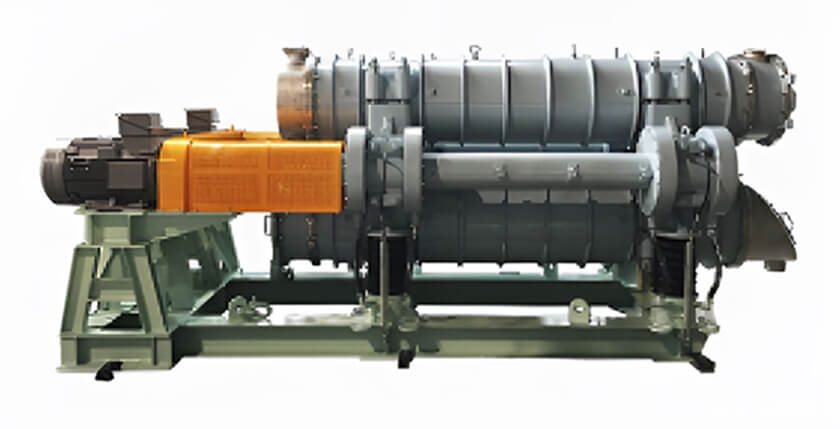
Source: CHUO KAKOHKI Official Website
(https://chuokakohki.com/products/mills)
Grinding Features
Designed for submicron grinding of advanced ceramics and electronic materials, including hard-to-grind SiC, with metal-free configuration options for high-purity processing. High-G impact energy enables both submicron grinding and mechanochemical processing, supporting advanced material development and alloy synthesis.
Maintenance Features
Unavoidable bearing replacement can be completed by simply swapping in a spare vibrator unit. This allows operation to resume quickly with minimal downtime.
- Pot Volume
- 17.2–803.2 gal (65–3,040 L)
- Media
- Steel, stainless steel, alumina, nylon
- Lining
- Steel, stainless steel, alumina, zirconia, rubber (polyurethane, NBR), nylon
- Process Type
- Dry / wet
- Operation Mode
- Continuous
- Laboratory
Test Model - Available
Show More
Grinding Battery Materials
and Carbon
For EV and
Energy Storage Production
and Carbon
For EV and
Energy Storage Production
Heavy-duty Vibration Grinders
Xiamen Tmax Battery Equipments
Xiamen Tmax Battery Equipments
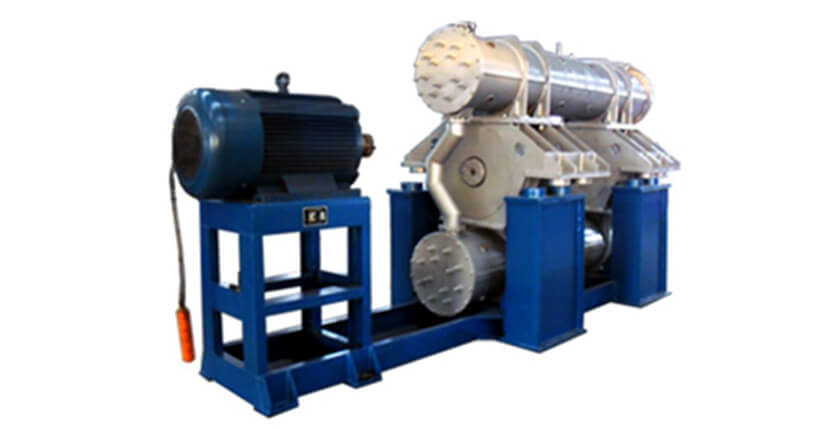
Source: TMAX Official Website
(https://www.tmaxcn.com/heavy-duty-vibration-grinder-for-large-scale-production_p3540.html)
Grinding Features
Supports contamination-controlled grinding for battery materials using low-cost metal-free liner and media options. Polyurethane lining combined with ceramic media such as alumina prevents metal contamination without the need for expensive ceramic liners.
Maintenance Features
It includes unlimited online technical support, helping users build a self-maintenance and servicing system while receiving technical guidance from the manufacturer.
- Pot Volume
- 26.4–317.0 gal (100–1,200 L)
- Media
- Zirconia, alumina, silicon nitride, agate, crystal glass, stainless steel, tungsten, high-wear-resistant steel, manganese steel, carbon steel, hard metal, cemented carbide, polyurethane balls, nylon, and more
- Lining
- Stainless steel, ceramic, zirconia, glazed block, nylon, PTFE, food-standard rubber, polyurethane
- Process Type
- Dry / wet
- Operation Mode
- Continuous
- Laboratory
Test Model - Available
Show More
Grinding Hard Scrap
and Industrial Waste
For Industrial Recycling and
Waste Processing
and Industrial Waste
For Industrial Recycling and
Waste Processing
Eccentric Vibrating Mills
SIEBTECHNIK TEMA
SIEBTECHNIK TEMA
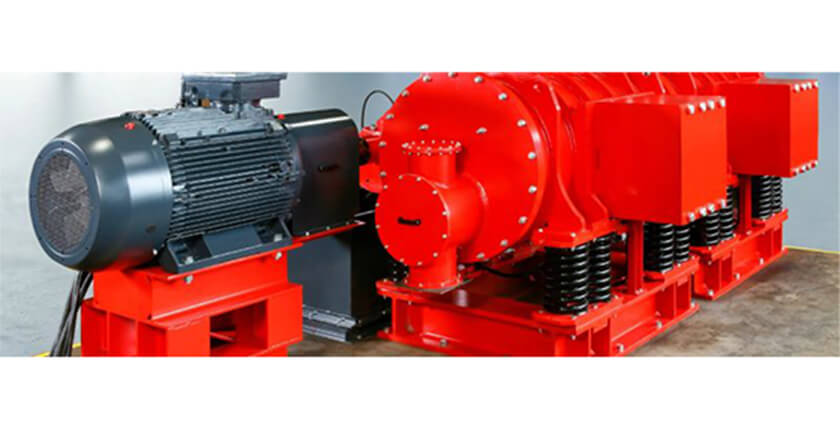
Source: SIEBTECHNIK TEMA Official Website
(https://www.siebtechnik-tema.com/unit_operation/eccentric-vibrating-mills/)
Grinding Features
Built for heavy-duty grinding of hard scrap and difficult industrial materials, including carbide waste and asbestos processing. It enables efficient recycling of tungsten and cemented carbide, and uses impact and heat to break down asbestos into fiber-free raw material.
Maintenance Features
For easier maintenance, the main drive components are installed outside the grinding cylinder, reducing the labor required for inspection and parts replacement.
- Pot Volume
- 2.9–502.5 gal (11–1,902 L)
- Media
- Steel, cemented carbide, ceramic, and more
- Lining
- Special steel, ceramic, rubberized
- Process Type
- Not specified on the official website
- Operation Mode
- Continuous / batch / automated batch
- Laboratory
Test Model - Available
Show More
*Source: TMAX Official Website (https://www.tmaxcn.com/1-100l-optional-vibrating-ball-mill-machine_p1778.html)
*Source: SIEBTECHNIK TEMA Official Website (https://www.siebtechnik-tema.com/unit_operation/eccentric-vibrating-mills/)
*Source: SIEBTECHNIK TEMA Official Website [PDF] (https://www.siebtechnik-tema.com/wp-content/uploads/2023/03/wb238e_Exzenterschwing_2025-1.pdf)
*Source: SIEBTECHNIK TEMA Official Website (https://www.siebtechnik-tema.com/unit_operation/eccentric-vibrating-mills/)
*Source: SIEBTECHNIK TEMA Official Website [PDF] (https://www.siebtechnik-tema.com/wp-content/uploads/2023/03/wb238e_Exzenterschwing_2025-1.pdf)