
The Vibratory Mill Selection Guide for Advanced Industries » Vibratory Mills by Material » Vibratory Mill for Abrasives
Vibratory Mill for Abrasives
Abrasive products succeed or fail on how their grain fractures during use, not just on raw hardness, which makes grinding for abrasive production a different problem from grinding a material down to a target particle size. This article explains why vibratory mills suit abrasive grain manufacturing, how to control fracture behavior for different grain grades, and how to meet the sizing precision abrasive standards require.
Why Vibratory Mills Suit Abrasive Grain Production
Most grinding applications treat particle fracture as something to control or minimize. Abrasive grain production treats it as the product: how a grain fractures under use determines whether it keeps cutting efficiently or goes dull.
Vibratory mills give you control over this through adjustable impact intensity and processing time, which lets you aim for a specific fracture behavior rather than simply reducing particle size as far as possible.
Friable vs. Tough Grain: Controlling Fracture Behavior
Friable abrasive grains are designed to fracture easily during grinding, continuously exposing fresh sharp edges so the grain keeps cutting without generating excess heat, which matters for precision grinding on heat-sensitive materials. Tough grains are engineered to resist fracture, holding their shape longer under heavy stock removal where durability matters more than self-sharpening.
Producing either grade starts with the same base material processed differently. Tuning impact energy toward the target fracture characteristic is what separates a friable grain batch from a tough one, rather than relying on different raw materials alone.
Meeting Grit and Mesh Size Standards
Abrasive products are sold against established grit and mesh size standards, and a batch that doesn't fall within the expected particle size distribution gets rejected or downgraded regardless of how well it performs.
Vibratory mills support the tight, repeatable particle size distribution grit grading requires, which matters more in abrasives than in applications where a wider size range is acceptable.
Wet and Dry Processing for Abrasive Grain and Blasting Media
| Dry Processing | The standard route for grinding wheel grain and coated abrasive products, where a free-flowing graded powder feeds directly into manufacturing. |
|---|---|
| Wet Processing | Used for fine lapping and polishing compounds, where a well-dispersed slurry delivers more uniform results on the finished surface. |
The finished product generally decides this choice: coated and bonded abrasives favor dry grain, while polishing and lapping applications favor a slurry.
Applications in Grinding Wheels, Coated Abrasives, and Blasting Media
Grinding wheel manufacturers grind aluminum oxide, silicon carbide, and similar materials into graded grain bonded into wheels for metal fabrication and precision machining. Coated abrasive producers use the same graded grain adhered to backing material for sandpaper and belts.
Sandblasting media producers process garnet, aluminum oxide, and other hard minerals to a size and shape suited to surface preparation and cleaning, where grain durability under repeated impact affects how many cycles the media survives before it needs replacing.
Selecting a Vibratory Mill for Abrasive Grain Processing
Abrasive grain production depends on controlling how particles fracture and hitting precise size grading, not on grinding as fine as possible. Vibratory mills support both through adjustable impact energy tuned to friable or tough grain behavior and the consistent particle size distribution that grit standards require.
CHECK
Find the Right Vibratory Mill
for Your Material
for Your Material
The right vibratory mill varies depending on the difficult-to-grind material, such as SiC or fine ceramics.
This article reviews the specifications of vibratory mills for mass production and their industry-specific applications. It compares vibratory mills suited to each material based on differences in available lining materials, grinding media, and processing capacity. Please refer to this article when selecting the right grinding machine.
3 Recommended Vibratory Mills
by Grinding Goal
by Grinding Goal
Even with the same material, the right vibratory mill depends on what you need to achieve: fine grinding hard materials at high purity, making the particle size distribution uniform from the grinding stage, or recycling hard-to-process waste. Below are three manufacturers, each matched to a different grinding goal.
For High-Purity Fine Grinding
of Hard Materials
of Hard Materials
Model CD Vibration Mill
CHUO KAKOHKI
CHUO KAKOHKI
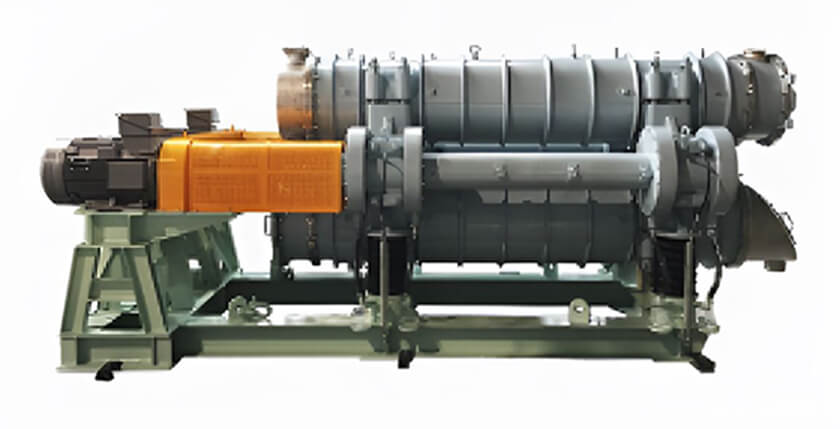
Source: CHUO KAKOHKI official website (https://chuokakohki.com/products/mills)
Grinding Capabilities
Its proprietary low-frequency, high-amplitude design generates high-G impact force, reducing difficult-to-grind materials such as SiC to submicron sizes in a short time. Material-contact parts can be made metal-free, supporting mass production of high-purity electronic materials.
Maintenance
When bearing replacement is required, the vibrator unit can be swapped with a spare, allowing operation to resume quickly with minimal downtime.
- Pot Volume
- 17.2–803.2 gal (65–3,040 L)
- Media
- Steel, stainless steel, alumina, nylon
- Lining
- Steel, stainless steel, alumina, zirconia, rubber (polyurethane, NBR), nylon
- Process Type
- Dry / Wet
- Operation Mode
- Continuous
- Laboratory
Test Model - Available
Show More
For Uniform Particle Size
Distribution from the Grinding Stage
Distribution from the Grinding Stage
Vibro-Energy Grinding Mill
SWECO
SWECO
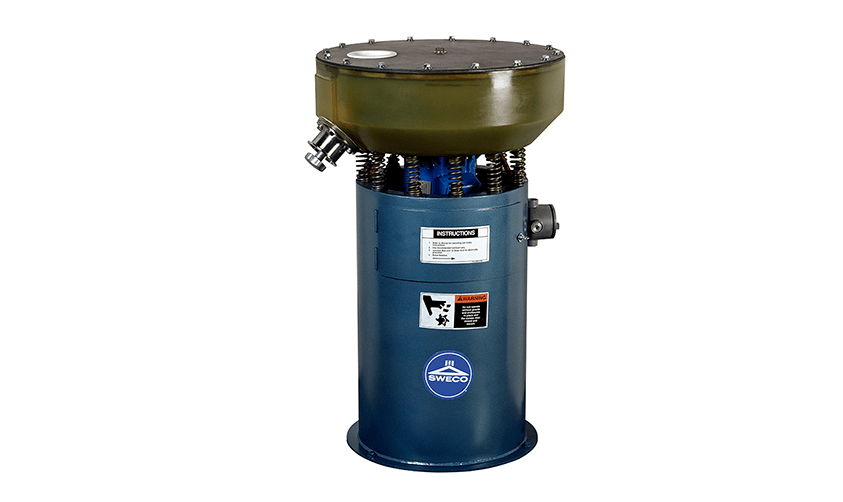
Image: fine-mill-finder.com (https://www.fine-mill-finder.com/wp/wp-content/uploads/500-grinding-mill-dm1.jpg)
Grinding Capabilities
SWECO's proprietary Vibro-Energy motion densely packs cylindrical media to maximize contact between media surfaces. This makes it easier to precisely control particle size and distribution, so particle size can be made uniform at the grinding stage.
Maintenance Support
Few moving parts help keep maintenance costs low, and abrasion-resistant linings can be replaced. SWECO also supplies grinding mill parts and accessories, including media and linings, to support ongoing maintenance.
- Pot Volume
- High-amplitude: 9.5–510.9 gal (36–1,934 L); low-amplitude: 0.7–845.4 gal (2.7–3,200 L)
- Media
- Cylindrical grinding media; media available from SWECO
- Lining
- Abrasion-resistant metal, ceramic, or elastomer
- Process Type
- High-amplitude: Dry / Wet; low-amplitude: Wet
- Operation Mode
- Not specified on the official website
- Laboratory
Test Model - Grinding pots available for smaller lab-size units
Show More
For Recycling
Hard-to-Process Waste
Hard-to-Process Waste
Eccentric Vibrating Mill
SIEBTECHNIK TEMA
SIEBTECHNIK TEMA
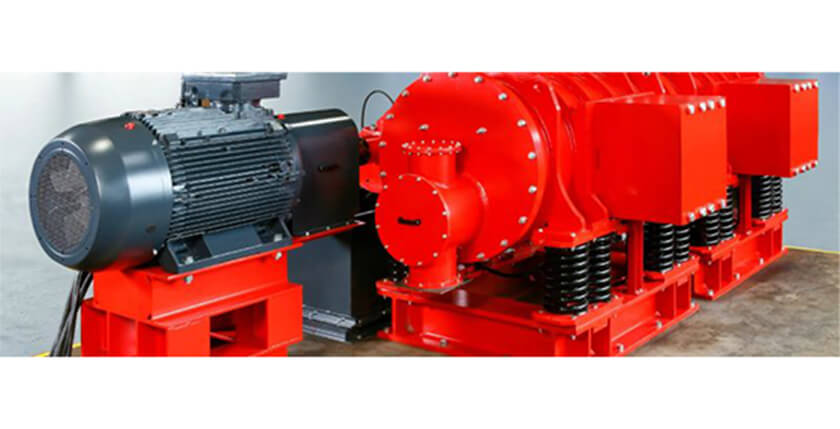
Source: SIEBTECHNIK TEMA official website (https://www.siebtechnik-tema.com/unit_operation/eccentric-vibrating-mills/)
Grinding Capabilities
Its eccentric design positions the exciter away from the center of gravity, generating strong impact forces and frictional heat. It can recycle scrap such as cemented-carbide drills and process asbestos into fiber-free raw material.
Maintenance
For easier maintenance, the main drive components are located outside the grinding cylinder, reducing the work required for inspections and parts replacement.
- Pot Volume
- 2.9–502.5 gal (11–1,902 L)
- Media
- Steel, cemented carbide, ceramic, and more
- Lining
- Special steel, ceramic, rubberized
- Process Type
- Not specified on the official website
- Operation Mode
- Continuous / Batch / Automated Batch
- Laboratory
Test Model - Available
Show More
*Source: SWECO Official Website (https://sweco.com/separation/grinding-mill.php)
*Source: SWECO Official Website [PDF] (https://sweco.com/addinfo/Grinding-Mills.pdf)
*Source: SIEBTECHNIK TEMA Official Website (https://www.siebtechnik-tema.com/unit_operation/eccentric-vibrating-mills/)
*Source: SIEBTECHNIK TEMA Official Website [PDF] (https://www.siebtechnik-tema.com/wp-content/uploads/2023/03/wb238e_Exzenterschwing_2025-1.pdf)