
The Vibratory Mill Selection Guide for Advanced Industries » Vibratory Mills by Material » Vibratory Mill for Advanced Ceramics
Vibratory Mill for Advanced Ceramics
In semiconductor, aerospace, and energy applications, advanced ceramics must meet exacting standards for purity and particle uniformity that standard industrial ceramics do not require. This article explains why vibratory mills are well suited to the fine grinding and contamination control that advanced ceramics processing demands, and how to choose between wet and dry methods as you scale from lab research to production.
Why Vibratory Mills Are Chosen for Advanced Ceramics Processing
Advanced ceramics such as high-purity alumina, zirconia, and silicon nitride are harder to grind than conventional industrial ceramics, and rougher grinding methods often leave particle sizes too coarse or too inconsistent for semiconductor and aerospace specifications.
Vibratory mills impart strong impact acceleration to the grinding media by adjusting vibration amplitude and frequency. Because of this, grinding capacity can reach 10 to 20 times that of a ball mill*, allowing even high-hardness advanced ceramics to be ground into the submicron and nano range within hours rather than days.
*Source: Matsubo Official Website (https://www.matsubo.co.jp/en/product/pulverizing/vibration-mill/)
Contamination Control for Semiconductor
and Aerospace Applications
In semiconductor and aerospace-grade ceramics, trace metal contamination from a worn grinding chamber can cause dielectric breakdown or reduce component fatigue life, so lining and media selection is not optional.
Vibratory mills allow the drum lining and grinding media to be matched to the material being processed. Options include alumina, zirconia, and urethane linings, and for the strictest purity requirements, autogenous grinding with same-material media keeps any wear-related impurities limited to the ceramic itself rather than introducing a foreign metal.
Wet and Dry Processing
for Advanced Ceramic Powders
| Wet Processing | Disperses particles in water or solvent to reach nano-scale fineness and prevent re-agglomeration, making it the better choice when the final product is a slurry or requires the finest possible particle size. |
|---|---|
| Dry Processing | Skips the drying step entirely and pairs well with downstream sintering or coating processes, making it the better choice when moisture exposure would affect material properties. |
Advanced ceramics developers frequently need to test both methods before settling on a production process, since the choice affects not only particle size but also how the powder behaves in later sintering or forming steps.
Scaling from Lab-Scale R&D
to Production
A grinding process validated on a small batch does not always behave the same way at production volume, and re-validating particle size distribution after scale-up can delay a product launch by months.
Batch-type vibratory mills support the small-lot testing and frequent material changes typical of R&D, while continuous-type mills handle the steady throughput of production runs. Because both share the same fundamental vibration mechanism, data from lab-scale batch trials transfers more directly to production-scale continuous operation than it would when switching between entirely different grinding technologies.
Industries Driving Demand
for Advanced Ceramics
Semiconductor manufacturing equipment makers grind advanced ceramics into components such as wafer chucks and etching chamber parts, where purity directly affects yield. Aerospace suppliers use fine-grained ceramic powders for lightweight structural and thermal-protection components that must meet strict certification tolerances.
Energy storage manufacturers grind ceramic electrolytes and separator materials for solid-state batteries and fuel cells, and medical device makers rely on the same fine grinding for implantable ceramic components. In each of these fields, consistent particle size is what allows the material to perform predictably once it reaches the customer's process.
Choosing a Vibratory Mill for Purity-Critical Ceramics
Advanced ceramics processing comes down to two requirements that standard industrial grinding often cannot satisfy together: fine, consistent particle size and contamination levels low enough for semiconductor, aerospace, or medical use. Vibratory mills address both through high-impact grinding and flexible lining and media selection, and the same batch-to-continuous mechanism makes it easier to carry lab-validated results into production.
CHECK
Find the Right Vibratory Mill
for Your Material
for Your Material
The right vibratory mill varies depending on the difficult-to-grind material, such as SiC or fine ceramics.
This article reviews the specifications of vibratory mills for mass production and their industry-specific applications. It compares vibratory mills suited to each material based on differences in available lining materials, grinding media, and processing capacity. Please refer to this article when selecting the right grinding machine.
3 Recommended Vibratory Mills
by Material
by Material
Grinding Hard Metals
and Ceramics
For Electronic Materials and
Semiconductor Materials
and Ceramics
For Electronic Materials and
Semiconductor Materials
Model CD Vibration Mill
CHUO KAKOHKI
CHUO KAKOHKI
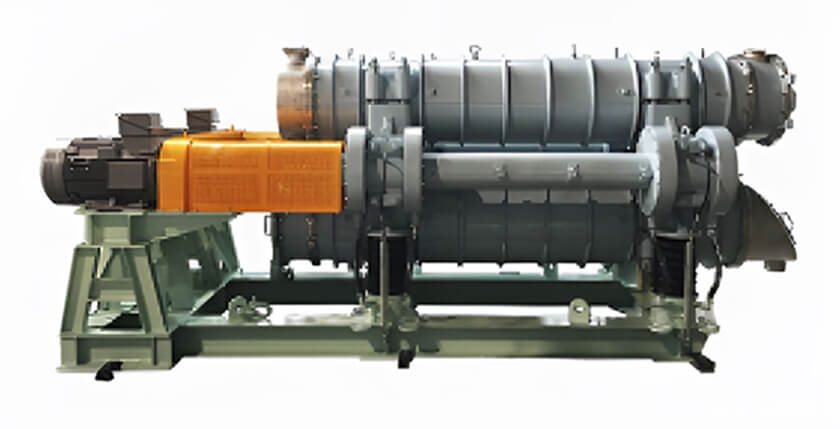
Source: CHUO KAKOHKI Official Website
(https://chuokakohki.com/products/mills)
Grinding Features
Designed for submicron grinding of advanced ceramics and electronic materials, including hard-to-grind SiC, with metal-free configuration options for high-purity processing. High-G impact energy enables both submicron grinding and mechanochemical processing, supporting advanced material development and alloy synthesis.
Maintenance Features
Unavoidable bearing replacement can be completed by simply swapping in a spare vibrator unit. This allows operation to resume quickly with minimal downtime.
- Pot Volume
- 17.2–803.2 gal (65–3,040 L)
- Media
- Steel, stainless steel, alumina, nylon
- Lining
- Steel, stainless steel, alumina, zirconia, rubber (polyurethane, NBR), nylon
- Process Type
- Dry / wet
- Operation Mode
- Continuous
- Laboratory
Test Model - Available
Show More
Grinding Battery Materials
and Carbon
For EV and
Energy Storage Production
and Carbon
For EV and
Energy Storage Production
Heavy-duty Vibration Grinders
Xiamen Tmax Battery Equipments
Xiamen Tmax Battery Equipments
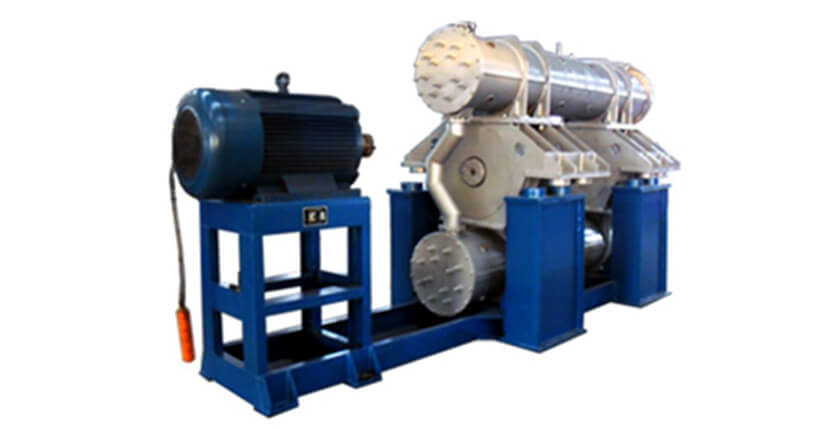
Source: TMAX Official Website
(https://www.tmaxcn.com/heavy-duty-vibration-grinder-for-large-scale-production_p3540.html)
Grinding Features
Supports contamination-controlled grinding for battery materials using low-cost metal-free liner and media options. Polyurethane lining combined with ceramic media such as alumina prevents metal contamination without the need for expensive ceramic liners.
Maintenance Features
It includes unlimited online technical support, helping users build a self-maintenance and servicing system while receiving technical guidance from the manufacturer.
- Pot Volume
- 26.4–317.0 gal (100–1,200 L)
- Media
- Zirconia, alumina, silicon nitride, agate, crystal glass, stainless steel, tungsten, high-wear-resistant steel, manganese steel, carbon steel, hard metal, cemented carbide, polyurethane balls, nylon, and more
- Lining
- Stainless steel, ceramic, zirconia, glazed block, nylon, PTFE, food-standard rubber, polyurethane
- Process Type
- Dry / wet
- Operation Mode
- Continuous
- Laboratory
Test Model - Available
Show More
Grinding Hard Scrap
and Industrial Waste
For Industrial Recycling and
Waste Processing
and Industrial Waste
For Industrial Recycling and
Waste Processing
Eccentric Vibrating Mills
SIEBTECHNIK TEMA
SIEBTECHNIK TEMA
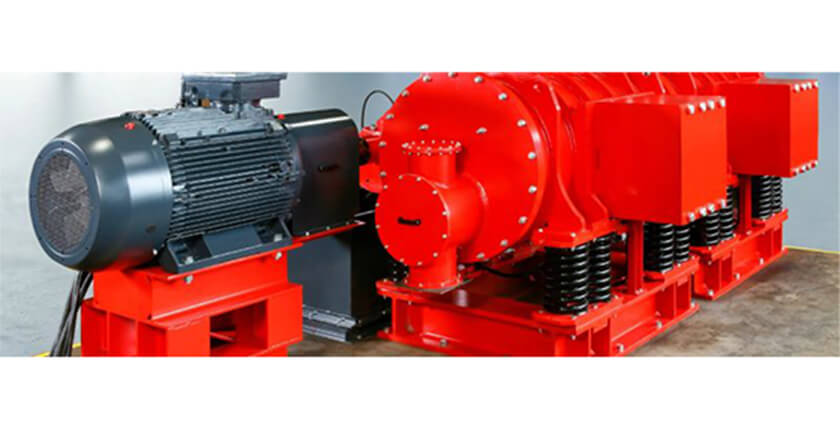
Source: SIEBTECHNIK TEMA Official Website
(https://www.siebtechnik-tema.com/unit_operation/eccentric-vibrating-mills/)
Grinding Features
Built for heavy-duty grinding of hard scrap and difficult industrial materials, including carbide waste and asbestos processing. It enables efficient recycling of tungsten and cemented carbide, and uses impact and heat to break down asbestos into fiber-free raw material.
Maintenance Features
For easier maintenance, the main drive components are installed outside the grinding cylinder, reducing the labor required for inspection and parts replacement.
- Pot Volume
- 2.9–502.5 gal (11–1,902 L)
- Media
- Steel, cemented carbide, ceramic, and more
- Lining
- Special steel, ceramic, rubberized
- Process Type
- Not specified on the official website
- Operation Mode
- Continuous / batch / automated batch
- Laboratory
Test Model - Available
Show More
*Source: TMAX Official Website (https://www.tmaxcn.com/1-100l-optional-vibrating-ball-mill-machine_p1778.html)
*Source: SIEBTECHNIK TEMA Official Website (https://www.siebtechnik-tema.com/unit_operation/eccentric-vibrating-mills/)
*Source: SIEBTECHNIK TEMA Official Website [PDF] (https://www.siebtechnik-tema.com/wp-content/uploads/2023/03/wb238e_Exzenterschwing_2025-1.pdf)
*Source: SIEBTECHNIK TEMA Official Website (https://www.siebtechnik-tema.com/unit_operation/eccentric-vibrating-mills/)
*Source: SIEBTECHNIK TEMA Official Website [PDF] (https://www.siebtechnik-tema.com/wp-content/uploads/2023/03/wb238e_Exzenterschwing_2025-1.pdf)