
The Vibratory Mill Selection Guide for Advanced Industries » Vibratory Mills by Material » Vibratory Mill for Silicon Nitride
Vibratory Mill for Silicon Nitride
Silicon nitride combines high strength, fracture toughness, and thermal shock resistance in a way few ceramics can match, which is why it ends up in hybrid bearings, cutting tools, and components that face rapid temperature swings inside semiconductor equipment. That same combination makes it one of the hardest technical ceramics to grind efficiently. This article explains how vibratory mills handle silicon nitride's grinding demands, including the sintering aids that most silicon nitride processing depends on.
Why Silicon Nitride's Hardness Demands More from Grinding Equipment
Silicon nitride's strong covalent bonding is what gives finished parts their strength and toughness at high temperature, and it is also what makes the raw powder resist breaking down under grinding more than alumina or zirconia.
Vibratory mills compensate for this through sustained high-frequency impact rather than a smaller number of harder strikes, which grinds silicon nitride into a fine, consistent powder without the extended cycle times a conventional ball mill would need to reach the same particle size.
Co-Grinding Sintering Aids for a Uniform Microstructure
Silicon nitride does not sinter to full density on its own. Most processes mix in sintering aids such as yttria or alumina before firing, and how evenly those aids disperse through the powder determines whether the final part sinters to consistent density or ends up with weak spots.
Grinding the base powder and sintering aids together in the same vibratory mill run gives more uniform dispersion than blending them separately after grinding. Uneven aid distribution shows up later as inconsistent strength across a batch, which is harder to catch before the parts are already sintered and tested.
Contamination Control for Semiconductor
Equipment Components
Silicon nitride components used inside semiconductor processing equipment, such as wafer susceptors and electrostatic chuck parts, sit close to the wafer itself, so trace metal contamination introduced during grinding can end up affecting device yield further down the line.
Vibratory mills manage this the same way as other high-purity ceramic processing: matching the lining and media to the material, with autogenous grinding using silicon nitride media as the standard approach when the specification cannot tolerate any foreign metal contribution.
Wet and Dry Processing for Silicon Nitride Powders
| Wet Processing | Disperses the base powder and sintering aids together more evenly, which is why most silicon nitride processing for high-reliability parts favors wet grinding despite the added drying step. |
|---|---|
| Dry Processing | Works when moisture exposure needs to be avoided or when the forming route calls for a free-flowing powder rather than a slurry, though sintering aid dispersion needs closer monitoring. |
The dispersion requirement for sintering aids is usually the deciding factor here, more so than it is for single-component ceramics that do not depend on an additive for densification.
Applications in Hybrid Bearings, Cutting Tools,
and High-Temperature Components
Bearing manufacturers grind silicon nitride into balls for hybrid bearings used in high-speed spindles, where its lower density reduces centrifugal loading and its electrical insulation prevents arcing damage in motor bearings. Cutting tool makers grind it into inserts that hold strength at the temperatures generated during high-speed machining, where many other ceramics would soften.
Gas turbine and aerospace component makers use silicon nitride for parts that face rapid heating and cooling cycles, and semiconductor equipment makers rely on the same thermal shock resistance for susceptors and chuck components that cycle through extreme temperature changes without cracking.
Selecting a Vibratory Mill for Silicon Nitride Processing
Silicon nitride's hardness alone would make it a demanding material to grind, and the sintering aids most processes depend on add a dispersion requirement that other technical ceramics do not have. Vibratory mills address both through sustained high-frequency impact and the ability to grind base powder and additives together, while lining and media selection keeps contamination out of purity-critical parts.
CHECK
Find the Right Vibratory Mill
for Your Material
for Your Material
The right vibratory mill varies depending on the difficult-to-grind material, such as SiC or fine ceramics.
This article reviews the specifications of vibratory mills for mass production and their industry-specific applications. It compares vibratory mills suited to each material based on differences in available lining materials, grinding media, and processing capacity. Please refer to this article when selecting the right grinding machine.
3 Recommended Vibratory Mills
by Material
by Material
Grinding Hard Metals
and Ceramics
For Electronic Materials and
Semiconductor Materials
and Ceramics
For Electronic Materials and
Semiconductor Materials
Model CD Vibration Mill
CHUO KAKOHKI
CHUO KAKOHKI
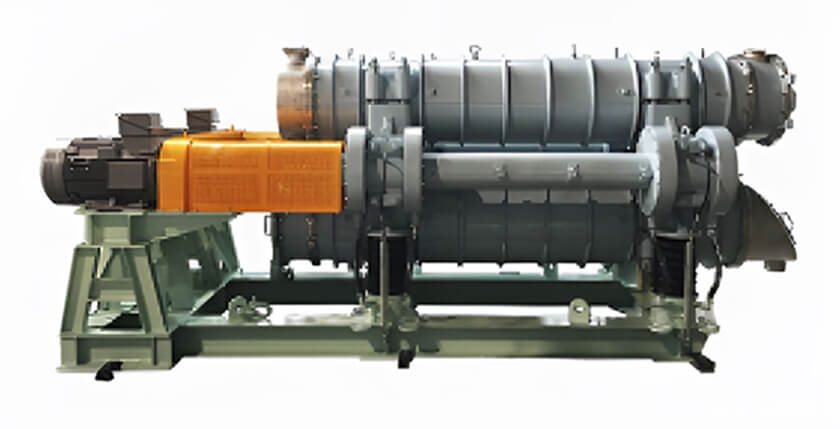
Source: CHUO KAKOHKI Official Website
(https://chuokakohki.com/products/mills)
Grinding Features
Designed for submicron grinding of advanced ceramics and electronic materials, including hard-to-grind SiC, with metal-free configuration options for high-purity processing. High-G impact energy enables both submicron grinding and mechanochemical processing, supporting advanced material development and alloy synthesis.
Maintenance Features
Unavoidable bearing replacement can be completed by simply swapping in a spare vibrator unit. This allows operation to resume quickly with minimal downtime.
- Pot Volume
- 17.2–803.2 gal (65–3,040 L)
- Media
- Steel, stainless steel, alumina, nylon
- Lining
- Steel, stainless steel, alumina, zirconia, rubber (polyurethane, NBR), nylon
- Process Type
- Dry / wet
- Operation Mode
- Continuous
- Laboratory
Test Model - Available
Show More
Grinding Battery Materials
and Carbon
For EV and
Energy Storage Production
and Carbon
For EV and
Energy Storage Production
Heavy-duty Vibration Grinders
Xiamen Tmax Battery Equipments
Xiamen Tmax Battery Equipments
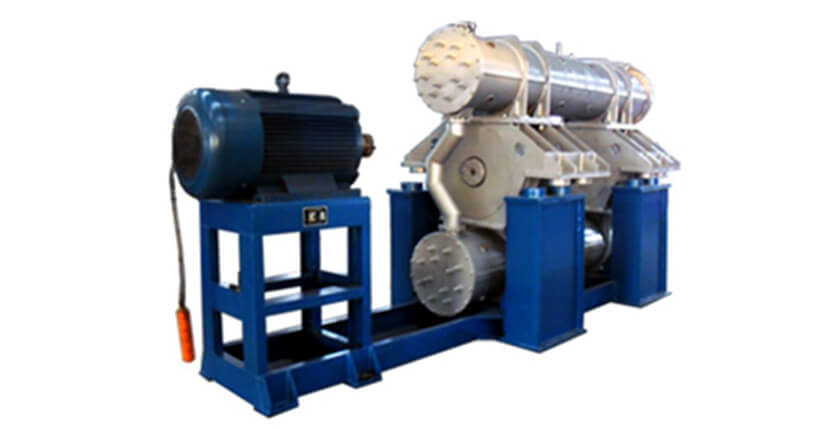
Source: TMAX Official Website
(https://www.tmaxcn.com/heavy-duty-vibration-grinder-for-large-scale-production_p3540.html)
Grinding Features
Supports contamination-controlled grinding for battery materials using low-cost metal-free liner and media options. Polyurethane lining combined with ceramic media such as alumina prevents metal contamination without the need for expensive ceramic liners.
Maintenance Features
It includes unlimited online technical support, helping users build a self-maintenance and servicing system while receiving technical guidance from the manufacturer.
- Pot Volume
- 26.4–317.0 gal (100–1,200 L)
- Media
- Zirconia, alumina, silicon nitride, agate, crystal glass, stainless steel, tungsten, high-wear-resistant steel, manganese steel, carbon steel, hard metal, cemented carbide, polyurethane balls, nylon, and more
- Lining
- Stainless steel, ceramic, zirconia, glazed block, nylon, PTFE, food-standard rubber, polyurethane
- Process Type
- Dry / wet
- Operation Mode
- Continuous
- Laboratory
Test Model - Available
Show More
Grinding Hard Scrap
and Industrial Waste
For Industrial Recycling and
Waste Processing
and Industrial Waste
For Industrial Recycling and
Waste Processing
Eccentric Vibrating Mills
SIEBTECHNIK TEMA
SIEBTECHNIK TEMA
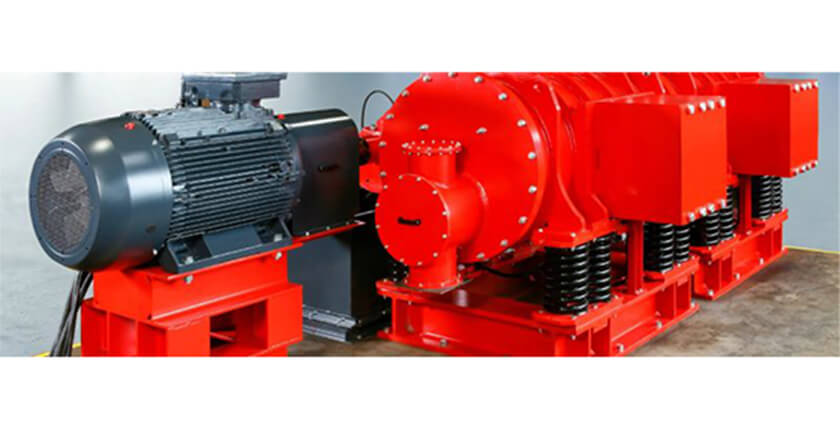
Source: SIEBTECHNIK TEMA Official Website
(https://www.siebtechnik-tema.com/unit_operation/eccentric-vibrating-mills/)
Grinding Features
Built for heavy-duty grinding of hard scrap and difficult industrial materials, including carbide waste and asbestos processing. It enables efficient recycling of tungsten and cemented carbide, and uses impact and heat to break down asbestos into fiber-free raw material.
Maintenance Features
For easier maintenance, the main drive components are installed outside the grinding cylinder, reducing the labor required for inspection and parts replacement.
- Pot Volume
- 2.9–502.5 gal (11–1,902 L)
- Media
- Steel, cemented carbide, ceramic, and more
- Lining
- Special steel, ceramic, rubberized
- Process Type
- Not specified on the official website
- Operation Mode
- Continuous / batch / automated batch
- Laboratory
Test Model - Available
Show More
*Source: TMAX Official Website (https://www.tmaxcn.com/1-100l-optional-vibrating-ball-mill-machine_p1778.html)
*Source: SIEBTECHNIK TEMA Official Website (https://www.siebtechnik-tema.com/unit_operation/eccentric-vibrating-mills/)
*Source: SIEBTECHNIK TEMA Official Website [PDF] (https://www.siebtechnik-tema.com/wp-content/uploads/2023/03/wb238e_Exzenterschwing_2025-1.pdf)
*Source: SIEBTECHNIK TEMA Official Website (https://www.siebtechnik-tema.com/unit_operation/eccentric-vibrating-mills/)
*Source: SIEBTECHNIK TEMA Official Website [PDF] (https://www.siebtechnik-tema.com/wp-content/uploads/2023/03/wb238e_Exzenterschwing_2025-1.pdf)