
The Vibratory Mill Selection Guide for Advanced Industries » Vibratory Mills by Material » Vibratory Mill for Silicon Carbide
Vibratory Mill for Silicon Carbide
Index
Show More
Because of its high hardness, SiC is a difficult-to-grind material with long grinding times and a high risk of contamination. This article explains the benefits of implementing vibratory mills that reduce processing time through powerful impact force and maintain purity through material selection, as well as how to use them according to the process.
Why Vibratory Mills
Are Chosen for
Fine Grinding SiC
Shorter Fine Grinding Time
Than Ball Mills
Vibratory mills cause the entire grinding cylinder to vibrate at high speed, simultaneously applying strong impact, friction, and shear forces through the media. Because of this mechanism, they can achieve fine grinding in about one-tenth to one-twentieth of the time required by a rotary ball mill.
They can reduce particle size to the submicron range (1 μm or less) in a short time through vibrational energy. Another feature is that motor power is converted directly into high-G vibration, allowing cracks to form efficiently in hard particles. Processes that once took several days can now be completed in a few hours, helping eliminate bottlenecks in production lines.
Lower Energy Costs
Than Jet Mills
A disadvantage of jet mills is that much of the electricity used to generate large volumes of compressed air is lost as heat, resulting in high energy consumption. In contrast, vibratory mills offer excellent energy efficiency because they convert motor power directly into mechanical vibration.
Vibratory mills use physical impact for grinding and can reduce power consumption while achieving the same fineness. Lower running costs are a significant advantage for companies seeking to reduce manufacturing costs and improve factory energy efficiency.
Same-Material Grinding
with SiC Liners and Media
to Protect
Semiconductor Purity
In electronic materials such as power semiconductors, trace amounts of metal impurities can directly cause product defects. Vibratory mills allow flexible selection of materials for the inner lining of the grinding cylinder and the media. By using same-material grinding with the same SiC material as the product, or by adopting urethane or rubber linings, vibratory mills can suppress contamination from wear particles, eliminate the acid-washing step after grinding, and improve yield and quality stability.
Choosing Between
Wet and Dry
Vibratory Milling
Based on the Final Product
Vibratory mills support both wet and dry processes, allowing flexible process design. Wet grinding prevents re-agglomeration by dispersing particles in a liquid, making it suitable for fine grinding in the submicron range and for slurry preparation. On the other hand, dry grinding can eliminate the drying step, helping reduce equipment implementation costs and simplify the process.
Dry grinding can also deliver mechanochemical effects such as surface modification and compounding through vibrational energy, contributing to the development of high-performance materials beyond simple fine grinding. By selecting the method according to the form of the final product and the requirements of the next process, the efficiency of the entire production line can be improved.
Main Products
and Applications
Requiring SiC Grinding
Because of its high hardness and thermal conductivity, SiC is used in a wide range of applications, including wafers and heat-dissipation components for power semiconductors and LEDs, as well as abrasives. To leverage these properties, uniform and fine particle control is essential.
Precise grinding using vibratory mills is also important for fine ceramic materials used in products such as mechanical seals and for filler incorporation into resins and metals. In advanced industries where product performance continues to improve, the ability to manufacture high-quality powders influences product competitiveness.
Conclusion: Vibratory Mills Are an Efficient Approach
for Fine Grinding SiC
Vibratory mills are one of the most effective approaches for shortening fine grinding time while achieving both lower running costs and higher purity through high-G impact force. For difficult-to-grind materials such as SiC, it is recommended to compare models, including the selection of lining and media materials.
CHECK
Find the Right Vibratory Mill
for Your Material
for Your Material
The right vibratory mill varies depending on the difficult-to-grind material, such as SiC or fine ceramics.
This article reviews the specifications of vibratory mills for mass production and their industry-specific applications. It compares vibratory mills suited to each material based on differences in available lining materials, grinding media, and processing capacity. Please refer to this article when selecting the right grinding machine.
3 Recommended Vibratory Mills
by Material
by Material
Grinding Hard Metals
and Ceramics
For Electronic Materials and
Semiconductor Materials
and Ceramics
For Electronic Materials and
Semiconductor Materials
Model CD Vibration Mill
CHUO KAKOHKI
CHUO KAKOHKI
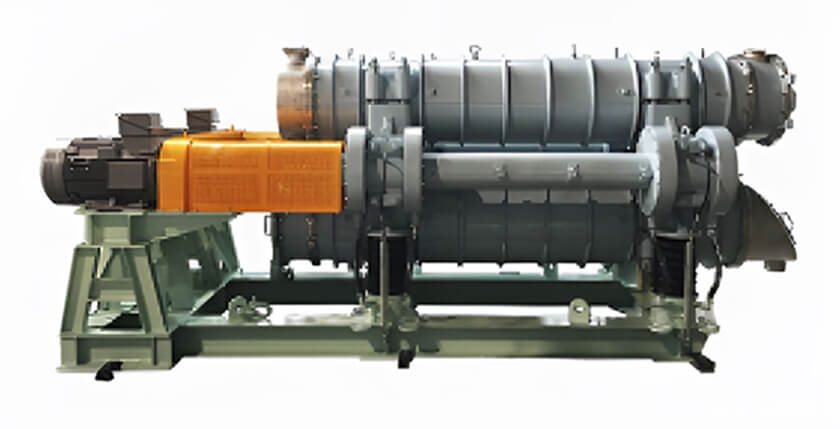
Source: CHUO KAKOHKI Official Website
(https://chuokakohki.com/products/mills)
Grinding Features
Designed for submicron grinding of advanced ceramics and electronic materials, including hard-to-grind SiC, with metal-free configuration options for high-purity processing. High-G impact energy enables both submicron grinding and mechanochemical processing, supporting advanced material development and alloy synthesis.
Maintenance Features
Unavoidable bearing replacement can be completed by simply swapping in a spare vibrator unit. This allows operation to resume quickly with minimal downtime.
- Pot Volume
- 17.2–803.2 gal (65–3,040 L)
- Media
- Steel, stainless steel, alumina, nylon
- Lining
- Steel, stainless steel, alumina, zirconia, rubber (polyurethane, NBR), nylon
- Process Type
- Dry / wet
- Operation Mode
- Continuous
- Laboratory
Test Model - Available
Show More
Grinding Battery Materials
and Carbon
For EV and
Energy Storage Production
and Carbon
For EV and
Energy Storage Production
Heavy-duty Vibration Grinders
Xiamen Tmax Battery Equipments
Xiamen Tmax Battery Equipments
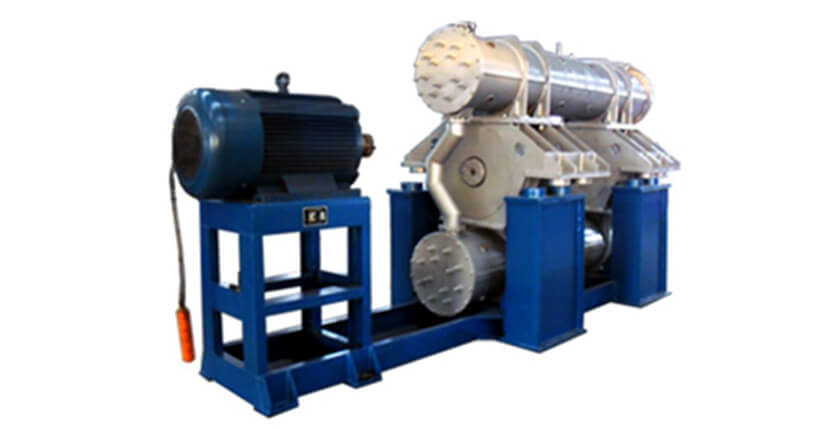
Source: TMAX Official Website
(https://www.tmaxcn.com/heavy-duty-vibration-grinder-for-large-scale-production_p3540.html)
Grinding Features
Supports contamination-controlled grinding for battery materials using low-cost metal-free liner and media options. Polyurethane lining combined with ceramic media such as alumina prevents metal contamination without the need for expensive ceramic liners.
Maintenance Features
It includes unlimited online technical support, helping users build a self-maintenance and servicing system while receiving technical guidance from the manufacturer.
- Pot Volume
- 26.4–317.0 gal (100–1,200 L)
- Media
- Zirconia, alumina, silicon nitride, agate, crystal glass, stainless steel, tungsten, high-wear-resistant steel, manganese steel, carbon steel, hard metal, cemented carbide, polyurethane balls, nylon, and more
- Lining
- Stainless steel, ceramic, zirconia, glazed block, nylon, PTFE, food-standard rubber, polyurethane
- Process Type
- Dry / wet
- Operation Mode
- Continuous
- Laboratory
Test Model - Available
Show More
Grinding Hard Scrap
and Industrial Waste
For Industrial Recycling and
Waste Processing
and Industrial Waste
For Industrial Recycling and
Waste Processing
Eccentric Vibrating Mills
SIEBTECHNIK TEMA
SIEBTECHNIK TEMA
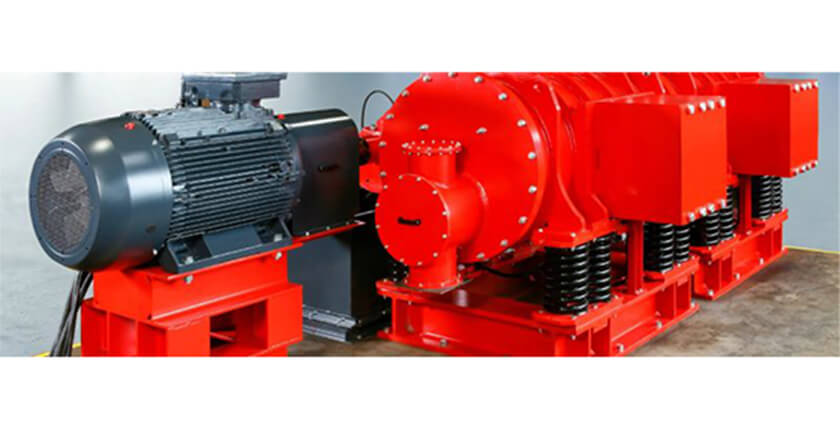
Source: SIEBTECHNIK TEMA Official Website
(https://www.siebtechnik-tema.com/unit_operation/eccentric-vibrating-mills/)
Grinding Features
Built for heavy-duty grinding of hard scrap and difficult industrial materials, including carbide waste and asbestos processing. It enables efficient recycling of tungsten and cemented carbide, and uses impact and heat to break down asbestos into fiber-free raw material.
Maintenance Features
For easier maintenance, the main drive components are installed outside the grinding cylinder, reducing the labor required for inspection and parts replacement.
- Pot Volume
- 2.9–502.5 gal (11–1,902 L)
- Media
- Steel, cemented carbide, ceramic, and more
- Lining
- Special steel, ceramic, rubberized
- Process Type
- Not specified on the official website
- Operation Mode
- Continuous / batch / automated batch
- Laboratory
Test Model - Available
Show More
*Source: TMAX Official Website (https://www.tmaxcn.com/1-100l-optional-vibrating-ball-mill-machine_p1778.html)
*Source: SIEBTECHNIK TEMA Official Website (https://www.siebtechnik-tema.com/unit_operation/eccentric-vibrating-mills/)
*Source: SIEBTECHNIK TEMA Official Website [PDF] (https://www.siebtechnik-tema.com/wp-content/uploads/2023/03/wb238e_Exzenterschwing_2025-1.pdf)
*Source: SIEBTECHNIK TEMA Official Website (https://www.siebtechnik-tema.com/unit_operation/eccentric-vibrating-mills/)
*Source: SIEBTECHNIK TEMA Official Website [PDF] (https://www.siebtechnik-tema.com/wp-content/uploads/2023/03/wb238e_Exzenterschwing_2025-1.pdf)