
The Vibratory Mill Selection Guide for Advanced Industries » Challenges in Fine Grinding » Improve Ball Mill Efficiency
Improve Ball Mill Efficiency
Index
Show More
Longer processing times, stalled fine grinding, and rising power costs in grinding processes are key challenges in manufacturing. This article explains not only how to review operating conditions for rotary ball mills but also how switching to vibratory mills can overcome structural limitations.
Three Basic Factors That
Affect Rotary Ball Mill
Grinding Efficiency
Grinding Media
(Ball) Selection
Optimizing ball diameter and specific gravity is essential. For fine grinding, smaller balls that increase contact frequency are advantageous. To avoid contamination from wear particles, selecting materials suited to the material being ground is also important.
Choosing Between
Wet and Dry Grinding
Compared with dry grinding, wet grinding prevents dust dispersion and helps prevent agglomeration while making it easier to obtain fine particles. However, it requires drying in downstream processes, and the impact on wastewater treatment and total energy costs must also be considered.
Thorough Pre-Treatment
(Coarse Grinding)
Multi-stage processing that involves coarse grinding with a cutter mill or crusher before feeding material into the rotary ball mill is also effective. Attempting to grind large lumps directly prolongs processing time and leads to unnecessary power consumption.
Replacement
with Vibratory Mills
Physical Limitations
of Rotary Ball Mills
Rotary ball mills operate by using gravity to drop the media. As rotational speed increases, the mill reaches a critical speed at which the balls stick to the wall due to centrifugal force, so there is a physical upper limit to input energy.
Efficiency Gains Through
the Grinding Capacity
of Vibratory Mills
Vibratory mills vibrate the entire drum at high speed, increasing the frequency of collisions between the media. They use acceleration several to more than ten times that of gravity. They deliver grinding capacity that is 10 to 20 times greater than that of conventional rotary ball mills*, reducing processing time and energy consumption.
*Source: Matsubo Official Website (https://www.matsubo.co.jp/en/product/pulverizing/vibration-mill/)
Innovative Benefits
of Vibratory Mills
By utilizing powerful impact and friction, vibratory mills deliver high performance in ultrafine grinding from several microns to the submicron range, which takes much longer with rotary ball mills. Compared with rotary ball mills, their compact equipment configuration helps improve factory layout efficiency by minimizing the installation footprint.
Beyond simple grinding, vibratory mills also offer the flexibility to be applied to mechanochemical reactions, particle surface modification, and precise mixing using powerful energy.
Vibratory Mills
as an Option to Overcome
Rotary Ball Mill Limitations
While media selection and pre-treatment review are important, the gravity-dependent limitations inherent to rotary ball mills cannot be avoided. To achieve further reductions in processing time and finer grinding into the submicron range, switching to vibratory mills that use powerful acceleration is one possible option. As a first step in implementation planning, check which models are compatible with your materials.
CHECK
Find the Right Vibratory Mill
for Your Material
for Your Material
The right vibratory mill varies depending on the material, such as metals, ceramics, LFP raw materials, and industrial waste.
This article reviews the specifications of vibratory mills for mass production and their industry-specific applications. It explains and compares vibratory mills suited to different materials based on differences in structure, vibration method, and processing capacity. Please refer to this article when selecting the right grinding machine.
3 Recommended Vibratory Mills
by Material
by Material
Grinding Hard Metals
and Ceramics
For Electronic Materials and
Semiconductor Materials
and Ceramics
For Electronic Materials and
Semiconductor Materials
Model CD Vibration Mill
CHUO KAKOHKI
CHUO KAKOHKI
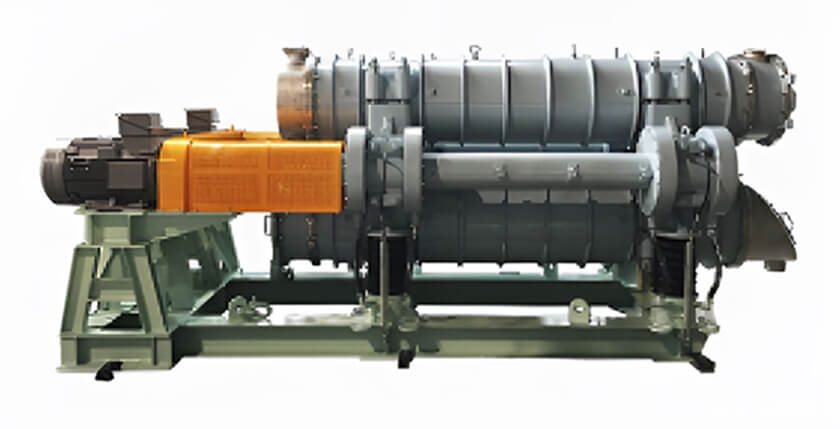
Source: CHUO KAKOHKI Official Website
(https://chuokakohki.com/products/mills)
Grinding Features
Designed for submicron grinding of advanced ceramics and electronic materials, including hard-to-grind SiC, with metal-free configuration options for high-purity processing. High-G impact energy enables both submicron grinding and mechanochemical processing, supporting advanced material development and alloy synthesis.
Maintenance Features
Unavoidable bearing replacement can be completed by simply swapping in a spare vibrator unit. This allows operation to resume quickly with minimal downtime.
- Pot Volume
- 17.2–803.2 gal (65–3,040 L)
- Media
- Steel, stainless steel, alumina, nylon
- Lining
- Steel, stainless steel, alumina, zirconia, rubber (polyurethane, NBR), nylon
- Process Type
- Dry / wet
- Operation Mode
- Continuous
- Laboratory
Test Model - Available
Show More
Grinding Battery Materials
and Carbon
For EV and
Energy Storage Production
and Carbon
For EV and
Energy Storage Production
Heavy-duty Vibration Grinders
Xiamen Tmax Battery Equipments
Xiamen Tmax Battery Equipments
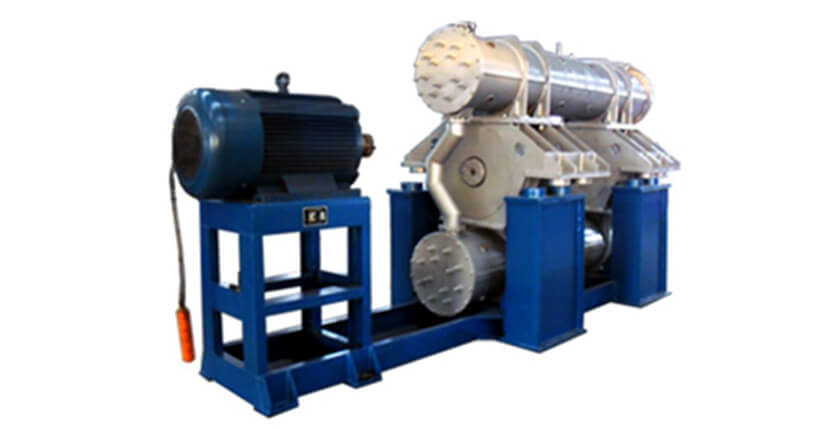
Source: TMAX Official Website
(https://www.tmaxcn.com/heavy-duty-vibration-grinder-for-large-scale-production_p3540.html)
Grinding Features
Supports contamination-controlled grinding for battery materials using low-cost metal-free liner and media options. Polyurethane lining combined with ceramic media such as alumina prevents metal contamination without the need for expensive ceramic liners.
Maintenance Features
It includes unlimited online technical support, helping users build a self-maintenance and servicing system while receiving technical guidance from the manufacturer.
- Pot Volume
- 26.4–317.0 gal (100–1,200 L)
- Media
- Zirconia, alumina, silicon nitride, agate, crystal glass, stainless steel, tungsten, high-wear-resistant steel, manganese steel, carbon steel, hard metal, cemented carbide, polyurethane balls, nylon, and more
- Lining
- Stainless steel, ceramic, zirconia, glazed block, nylon, PTFE, food-standard rubber, polyurethane
- Process Type
- Dry / wet
- Operation Mode
- Continuous
- Laboratory
Test Model - Available
Show More
Grinding Hard Scrap
and Industrial Waste
For Industrial Recycling and
Waste Processing
and Industrial Waste
For Industrial Recycling and
Waste Processing
Eccentric Vibrating Mills
SIEBTECHNIK TEMA
SIEBTECHNIK TEMA
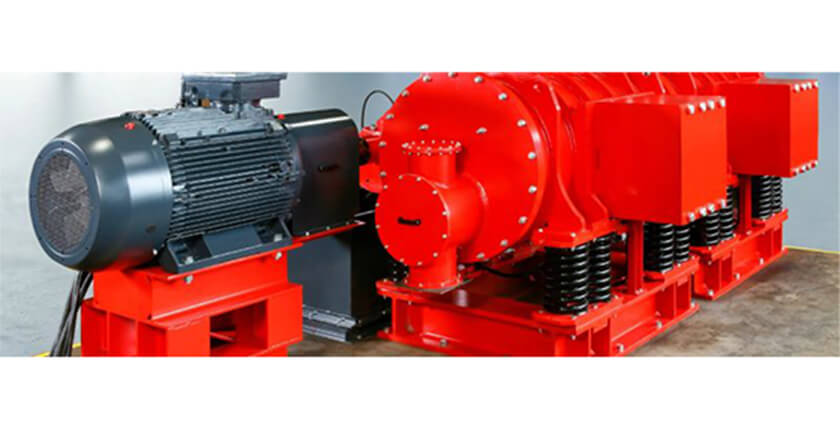
Source: SIEBTECHNIK TEMA Official Website
(https://www.siebtechnik-tema.com/unit_operation/eccentric-vibrating-mills/)
Grinding Features
Built for heavy-duty grinding of hard scrap and difficult industrial materials, including carbide waste and asbestos processing. It enables efficient recycling of tungsten and cemented carbide, and uses impact and heat to break down asbestos into fiber-free raw material.
Maintenance Features
For easier maintenance, the main drive components are installed outside the grinding cylinder, reducing the labor required for inspection and parts replacement.
- Pot Volume
- 2.9–502.5 gal (11–1,902 L)
- Media
- Steel, cemented carbide, ceramic, and more
- Lining
- Special steel, ceramic, rubberized
- Process Type
- Not specified on the official website
- Operation Mode
- Continuous / batch / automated batch
- Laboratory
Test Model - Available
Show More
*Source: TMAX Official Website (https://www.tmaxcn.com/1-100l-optional-vibrating-ball-mill-machine_p1778.html)
*Source: SIEBTECHNIK TEMA Official Website (https://www.siebtechnik-tema.com/unit_operation/eccentric-vibrating-mills/)
*Source: SIEBTECHNIK TEMA Official Website [PDF] (https://www.siebtechnik-tema.com/wp-content/uploads/2023/03/wb238e_Exzenterschwing_2025-1.pdf)
*Source: SIEBTECHNIK TEMA Official Website (https://www.siebtechnik-tema.com/unit_operation/eccentric-vibrating-mills/)
*Source: SIEBTECHNIK TEMA Official Website [PDF] (https://www.siebtechnik-tema.com/wp-content/uploads/2023/03/wb238e_Exzenterschwing_2025-1.pdf)