
The Vibratory Mill Selection Guide for Advanced Industries » Vibratory Mills by Material » Vibratory Mill for Alumina
Vibratory Mill for Alumina
Alumina covers more ground than almost any other technical ceramic, from low-cost industrial insulators to 99.5%-plus electronic substrates, and the right grinding approach changes depending on which end of that range you are targeting. This article explains how vibratory mills handle alumina's full purity spectrum and how to match contamination control and particle size to the grade your application actually requires.
Why Vibratory Mills Suit Alumina Across Purity Grades
Alumina's hardness sits below materials like silicon carbide or aluminum nitride, but it still grinds slowly in a conventional ball mill, especially when a specification calls for fine, consistent particle size rather than a coarse industrial powder.
Vibratory mills apply the same high-frequency impact whether the target is a 94% industrial-grade powder or a 99.5% electronic-grade one, which means the same equipment can scale up or down in fineness and throughput without switching grinding technologies as the application changes.
Matching Contamination Control
to Your Target Purity Grade
A refractory brick manufacturer and a substrate maker are not solving the same problem, even though both are grinding alumina. Industrial-grade alumina for insulators and wear tiles tolerates a level of trace contamination that would disqualify a batch destined for an electronic substrate.
Vibratory mills let you scale the lining and media investment to match. Standard steel or rubber linings are often sufficient for industrial-grade runs, while alumina-lined chambers and same-material media become necessary once a specification moves into 99.5% or higher purity territory. Specifying the higher-cost option for every batch wastes money; specifying it too low risks rejected material.
Particle Size Requirements by Application
Refractory and abrasive applications generally call for a coarser, less uniform particle size, since the cost of over-grinding outweighs any performance benefit. Electronic substrates and precision insulators need the opposite: a narrow particle size distribution that packs densely and sinters without leaving voids.
Vibratory mills adjust to either target through vibration amplitude, frequency, and processing time, so the same base process can be tuned toward throughput or toward fineness depending on which side of the application spectrum you are producing for.
Wet and Dry Processing for Alumina Powders
| Dry Processing | The standard route for industrial-grade alumina destined for dry pressing into insulators, wear tiles, and refractory shapes, where eliminating a drying step keeps costs down. |
|---|---|
| Wet Processing | Preferred for high-purity electronic-grade alumina, where a well-dispersed slurry supports tape casting or slip casting into thin, uniform substrate layers. |
Choosing between the two generally follows the purity grade: cost-driven industrial applications lean dry, while precision electronic applications lean wet.
Applications from Industrial Insulators
to Electronic Substrates
Electrical insulator and wear-tile manufacturers grind industrial-grade alumina for parts where cost matters more than absolute purity. Refractory makers use the same mid-grade alumina for furnace linings and kiln furniture that need to withstand high temperatures without special electrical properties.
At the other end of the spectrum, electronic substrate and semiconductor component makers grind high-purity alumina where even small contamination levels affect dielectric performance, and abrasive manufacturers grind alumina at whatever grade balances cutting performance against material cost.
Selecting a Vibratory Mill for Your Alumina Grade
Alumina grinding is less about a single best process and more about right-sizing the process to the purity grade your application actually needs. Vibratory mills support that range directly, scaling lining, media, and particle size control from cost-driven industrial runs to high-purity electronic substrates without changing the underlying equipment.
CHECK
Find the Right Vibratory Mill
for Your Material
for Your Material
The right vibratory mill varies depending on the difficult-to-grind material, such as SiC or fine ceramics.
This article reviews the specifications of vibratory mills for mass production and their industry-specific applications. It compares vibratory mills suited to each material based on differences in available lining materials, grinding media, and processing capacity. Please refer to this article when selecting the right grinding machine.
3 Recommended Vibratory Mills
by Material
by Material
Grinding Hard Metals
and Ceramics
For Electronic Materials and
Semiconductor Materials
and Ceramics
For Electronic Materials and
Semiconductor Materials
Model CD Vibration Mill
CHUO KAKOHKI
CHUO KAKOHKI
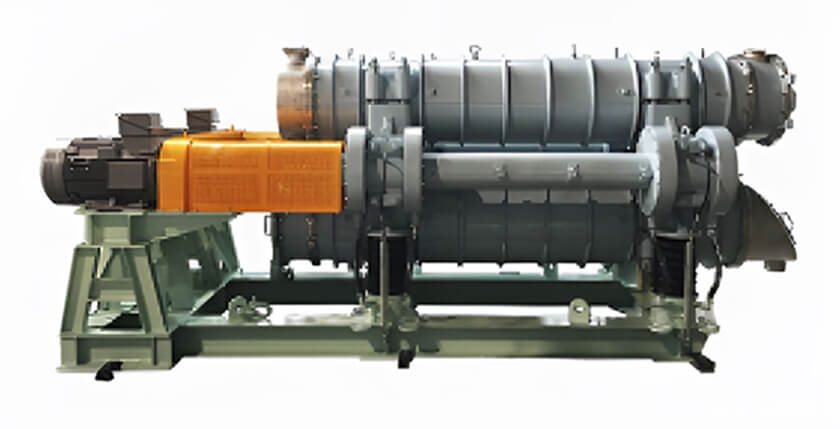
Source: CHUO KAKOHKI Official Website
(https://chuokakohki.com/products/mills)
Grinding Features
Designed for submicron grinding of advanced ceramics and electronic materials, including hard-to-grind SiC, with metal-free configuration options for high-purity processing. High-G impact energy enables both submicron grinding and mechanochemical processing, supporting advanced material development and alloy synthesis.
Maintenance Features
Unavoidable bearing replacement can be completed by simply swapping in a spare vibrator unit. This allows operation to resume quickly with minimal downtime.
- Pot Volume
- 17.2–803.2 gal (65–3,040 L)
- Media
- Steel, stainless steel, alumina, nylon
- Lining
- Steel, stainless steel, alumina, zirconia, rubber (polyurethane, NBR), nylon
- Process Type
- Dry / wet
- Operation Mode
- Continuous
- Laboratory
Test Model - Available
Show More
Grinding Battery Materials
and Carbon
For EV and
Energy Storage Production
and Carbon
For EV and
Energy Storage Production
Heavy-duty Vibration Grinders
Xiamen Tmax Battery Equipments
Xiamen Tmax Battery Equipments
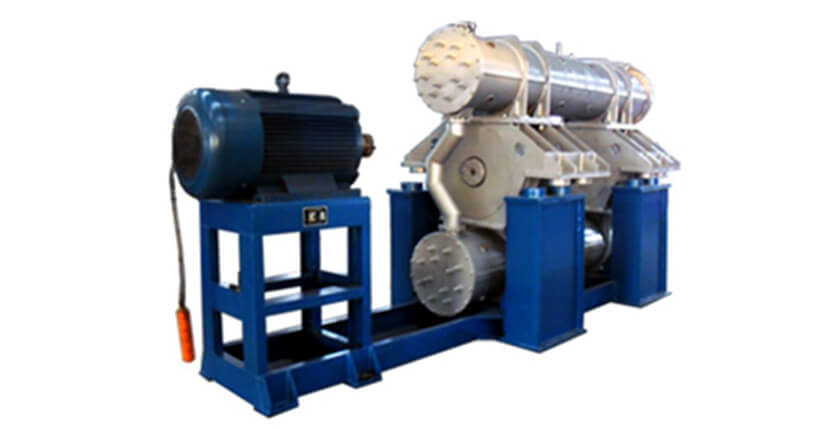
Source: TMAX Official Website
(https://www.tmaxcn.com/heavy-duty-vibration-grinder-for-large-scale-production_p3540.html)
Grinding Features
Supports contamination-controlled grinding for battery materials using low-cost metal-free liner and media options. Polyurethane lining combined with ceramic media such as alumina prevents metal contamination without the need for expensive ceramic liners.
Maintenance Features
It includes unlimited online technical support, helping users build a self-maintenance and servicing system while receiving technical guidance from the manufacturer.
- Pot Volume
- 26.4–317.0 gal (100–1,200 L)
- Media
- Zirconia, alumina, silicon nitride, agate, crystal glass, stainless steel, tungsten, high-wear-resistant steel, manganese steel, carbon steel, hard metal, cemented carbide, polyurethane balls, nylon, and more
- Lining
- Stainless steel, ceramic, zirconia, glazed block, nylon, PTFE, food-standard rubber, polyurethane
- Process Type
- Dry / wet
- Operation Mode
- Continuous
- Laboratory
Test Model - Available
Show More
Grinding Hard Scrap
and Industrial Waste
For Industrial Recycling and
Waste Processing
and Industrial Waste
For Industrial Recycling and
Waste Processing
Eccentric Vibrating Mills
SIEBTECHNIK TEMA
SIEBTECHNIK TEMA
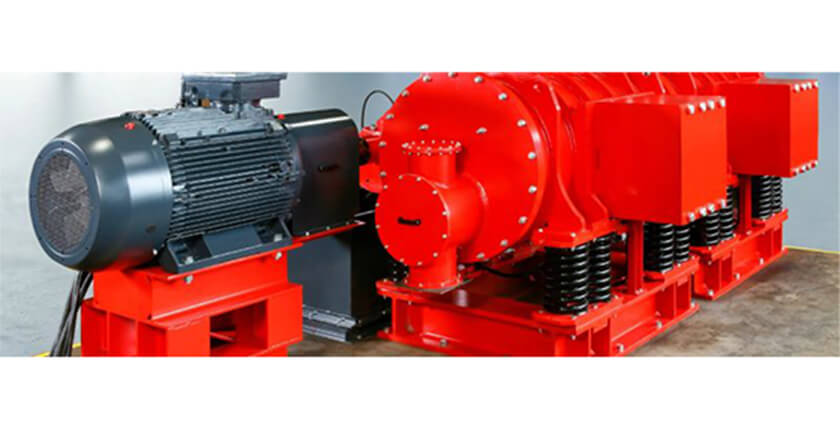
Source: SIEBTECHNIK TEMA Official Website
(https://www.siebtechnik-tema.com/unit_operation/eccentric-vibrating-mills/)
Grinding Features
Built for heavy-duty grinding of hard scrap and difficult industrial materials, including carbide waste and asbestos processing. It enables efficient recycling of tungsten and cemented carbide, and uses impact and heat to break down asbestos into fiber-free raw material.
Maintenance Features
For easier maintenance, the main drive components are installed outside the grinding cylinder, reducing the labor required for inspection and parts replacement.
- Pot Volume
- 2.9–502.5 gal (11–1,902 L)
- Media
- Steel, cemented carbide, ceramic, and more
- Lining
- Special steel, ceramic, rubberized
- Process Type
- Not specified on the official website
- Operation Mode
- Continuous / batch / automated batch
- Laboratory
Test Model - Available
Show More
*Source: TMAX Official Website (https://www.tmaxcn.com/1-100l-optional-vibrating-ball-mill-machine_p1778.html)
*Source: SIEBTECHNIK TEMA Official Website (https://www.siebtechnik-tema.com/unit_operation/eccentric-vibrating-mills/)
*Source: SIEBTECHNIK TEMA Official Website [PDF] (https://www.siebtechnik-tema.com/wp-content/uploads/2023/03/wb238e_Exzenterschwing_2025-1.pdf)
*Source: SIEBTECHNIK TEMA Official Website (https://www.siebtechnik-tema.com/unit_operation/eccentric-vibrating-mills/)
*Source: SIEBTECHNIK TEMA Official Website [PDF] (https://www.siebtechnik-tema.com/wp-content/uploads/2023/03/wb238e_Exzenterschwing_2025-1.pdf)