
Handling
Index
Show More
Handling provides vibratory mills that are often used for fine powder processing. This article explains the features and product specifications of Handling’s vibratory mill, as well as the benefits companies can gain from its implementation.
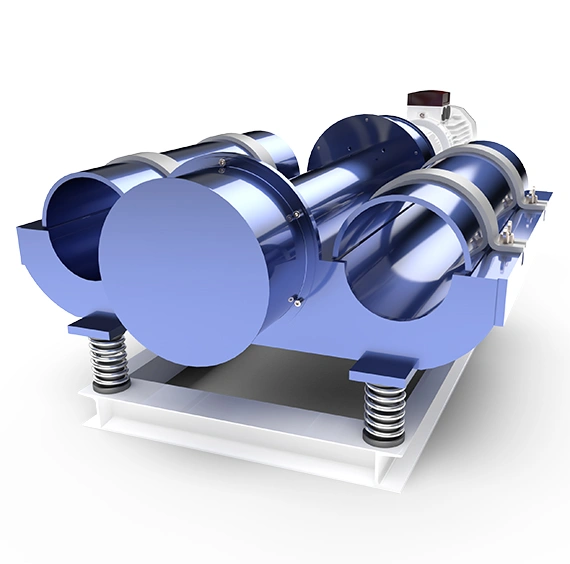
Source: Handling Official Website - Vibratory Grinding Mill
(https://handlingusa.com/vibratory-mill-details)
(https://handlingusa.com/vibratory-mill-details)
Features and Strengths
of Handling Vibratory Mills
Improved Yield
and Lower Costs
Through
Fine Powder Processing
Handling’s vibratory mill efficiently performs fine powder processing and particle size reduction by applying mechanical agitation to a chamber filled with media. It can grind materials uniformly to a fine particle size, helping prevent quality variations in downstream processes and reduce manufacturing costs through improved yield.
Seamless Transition
from Research
and Development
to Mass Production
Handling offers a range of vibratory mills tailored to production scale, from pilot models with a capacity of 0.92 gal × 2 pots (3.5 L × 2 pots) to large-capacity mass-production models. Data-based seamless scale-up is possible from small-lot laboratory tests to continuous mass production in factories. This lineup supports phased equipment investment planning and smooth production line development.
Basic Information: Handling Vibratory Mills
| Process Type | Not specified on the official website |
|---|---|
| Operation Mode | Not specified on the official website |
| Examples of Materials Processed | Not specified on the official website |
| Typical Applications | Not specified on the official website |
| Applicable Industries | Energy material plants and the powder processing industry |
| Test Machine | Not specified on the official website |
Maintenance Features
of Handling Vibratory Mills
Handling’s vibratory mill features a simple structure, making daily cleaning and part inspection or replacement easy. It helps reduce downtime associated with maintenance work, making it possible to maintain overall factory productivity.
Grinding Examples Using Handling Vibratory Mills
No grinding examples using vibratory mills were listed on the official website.
For Companies Seeking
Precise Grinding
and Stable Supply
from R&D
to Mass Production
Handling’s vibratory mill delivers uniform and precise particle size reduction in advanced powder processing. With products tailored to production scale from the research and development stage to mass-production lines, it is a suitable solution for companies seeking to smoothly manufacture and supply high-quality powder raw materials.
CHECK
Find the Right Vibratory Mill
for Your Material
for Your Material
The right vibratory mill varies depending on the material, such as metals, ceramics, LFP raw materials, and industrial waste.
This article reviews the specifications of vibratory mills for mass production and their industry-specific applications. It explains and compares vibratory mills suited to different materials based on differences in structure, vibration method, and processing capacity. Please refer to this article when selecting the right grinding machine.
Product Overview: Handling Vibratory Mills
Vibratory Grinding Mill
Source: Handling Official Website (https://handlingusa.com/vibratory-mill-details)
The Vibratory Grinding Mill is equipment that performs mechanical agitation in a chamber filled with media to finely grind the target material. With options ranging from pilot versions to mass-production versions, it enables flexible equipment deployment tailored to the company’s business plans and production scale.
Specifications:
Vibratory Grinding Mill
| Pot Volume | 0.92 gal × 2–1,003.9 gal (3.5 L × 2–3,800 L) |
|---|---|
| Media | Steel ball |
| Lining | Not specified on the official website |
| Process Type | Not specified on the official website |
| Operation Mode | Not specified on the official website |
| Examples of Materials Processed | Not specified on the official website |
Source: Handling Official Website https://handlingusa.com/vibratory-mill-details
Company Overview: Handling
Source: Handling Official Website
(https://handlingusa.com/)
(https://handlingusa.com/)
Handling is a company that provides advanced solutions for energy material plants and the powder processing industry. The company provides end-to-end support from equipment design to implementation, helping improve production line efficiency and quality in manufacturing sites.
| Company Name | Handling |
|---|---|
| Company Location | Texas, United States |
| Branches and Distributors | Not specified on the official website |
| Official Website | https://handlingusa.com/ |
3 Recommended Vibratory Mills
by Grinding Goal
by Grinding Goal
Even with the same material, the right vibratory mill depends on what you need to achieve: fine grinding hard materials at high purity, making the particle size distribution uniform from the grinding stage, or recycling hard-to-process waste. Below are three manufacturers, each matched to a different grinding goal.
For High-Purity Fine Grinding
of Hard Materials
of Hard Materials
Model CD Vibration Mill
CHUO KAKOHKI
CHUO KAKOHKI
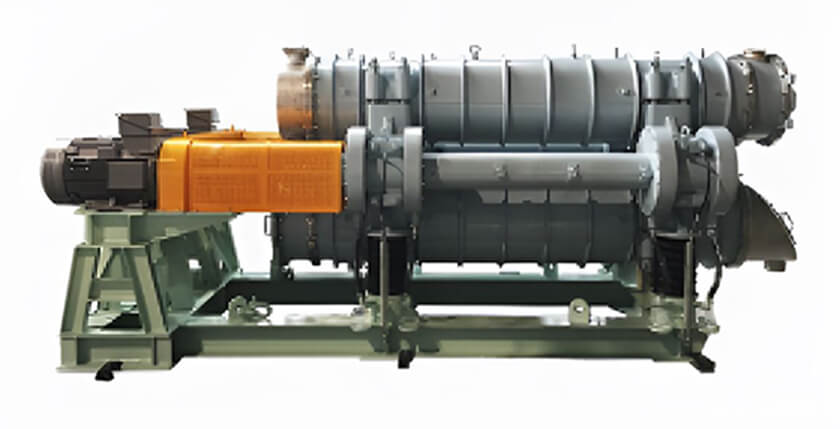
Source: CHUO KAKOHKI official website (https://chuokakohki.com/products/mills)
Grinding Capabilities
Its proprietary low-frequency, high-amplitude design generates high-G impact force, reducing difficult-to-grind materials such as SiC to submicron sizes in a short time. Material-contact parts can be made metal-free, supporting mass production of high-purity electronic materials.
Maintenance
When bearing replacement is required, the vibrator unit can be swapped with a spare, allowing operation to resume quickly with minimal downtime.
- Pot Volume
- 17.2–803.2 gal (65–3,040 L)
- Media
- Steel, stainless steel, alumina, nylon
- Lining
- Steel, stainless steel, alumina, zirconia, rubber (polyurethane, NBR), nylon
- Process Type
- Dry / Wet
- Operation Mode
- Continuous
- Laboratory
Test Model - Available
Show More
For Uniform Particle Size
Distribution from the Grinding Stage
Distribution from the Grinding Stage
Vibro-Energy Grinding Mill
SWECO
SWECO
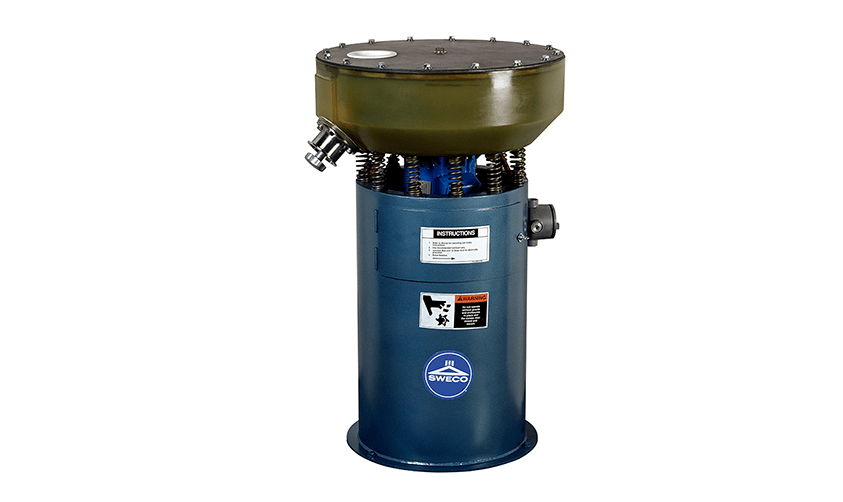
Image: fine-mill-finder.com (https://www.fine-mill-finder.com/wp/wp-content/uploads/500-grinding-mill-dm1.jpg)
Grinding Capabilities
SWECO's proprietary Vibro-Energy motion densely packs cylindrical media to maximize contact between media surfaces. This makes it easier to precisely control particle size and distribution, so particle size can be made uniform at the grinding stage.
Maintenance Support
Few moving parts help keep maintenance costs low, and abrasion-resistant linings can be replaced. SWECO also supplies grinding mill parts and accessories, including media and linings, to support ongoing maintenance.
- Pot Volume
- High-amplitude: 9.5–510.9 gal (36–1,934 L); low-amplitude: 0.7–845.4 gal (2.7–3,200 L)
- Media
- Cylindrical grinding media; media available from SWECO
- Lining
- Abrasion-resistant metal, ceramic, or elastomer
- Process Type
- High-amplitude: Dry / Wet; low-amplitude: Wet
- Operation Mode
- Not specified on the official website
- Laboratory
Test Model - Grinding pots available for smaller lab-size units
Show More
For Recycling
Hard-to-Process Waste
Hard-to-Process Waste
Eccentric Vibrating Mill
SIEBTECHNIK TEMA
SIEBTECHNIK TEMA
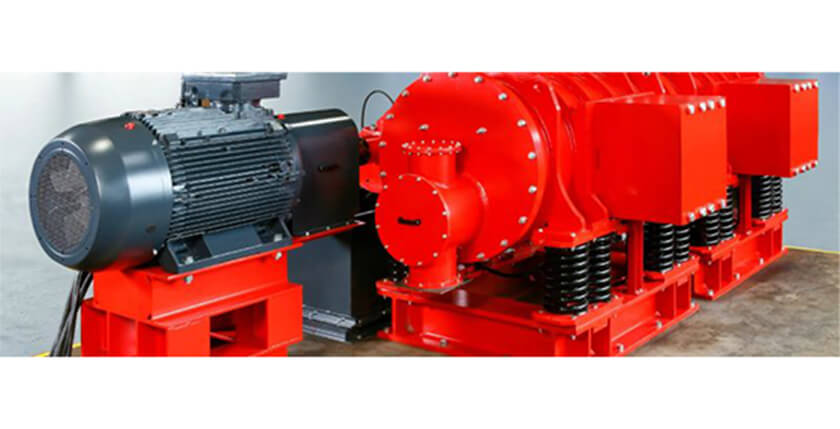
Source: SIEBTECHNIK TEMA official website (https://www.siebtechnik-tema.com/unit_operation/eccentric-vibrating-mills/)
Grinding Capabilities
Its eccentric design positions the exciter away from the center of gravity, generating strong impact forces and frictional heat. It can recycle scrap such as cemented-carbide drills and process asbestos into fiber-free raw material.
Maintenance
For easier maintenance, the main drive components are located outside the grinding cylinder, reducing the work required for inspections and parts replacement.
- Pot Volume
- 2.9–502.5 gal (11–1,902 L)
- Media
- Steel, cemented carbide, ceramic, and more
- Lining
- Special steel, ceramic, rubberized
- Process Type
- Not specified on the official website
- Operation Mode
- Continuous / Batch / Automated Batch
- Laboratory
Test Model - Available
Show More
*Source: SWECO Official Website (https://sweco.com/separation/grinding-mill.php)
*Source: SWECO Official Website [PDF] (https://sweco.com/addinfo/Grinding-Mills.pdf)
*Source: SIEBTECHNIK TEMA Official Website (https://www.siebtechnik-tema.com/unit_operation/eccentric-vibrating-mills/)
*Source: SIEBTECHNIK TEMA Official Website [PDF] (https://www.siebtechnik-tema.com/wp-content/uploads/2023/03/wb238e_Exzenterschwing_2025-1.pdf)