
The Vibratory Mill Selection Guide for Advanced Industries » Vibratory Mill Comparisons » CHUO KAKOHKI vs SIEBTECHNIK TEMA
CHUO KAKOHKI vs SIEBTECHNIK TEMA
Your production line's operation mode is the starting point for choosing between CHUO KAKOHKI's CD Type and SIEBTECHNIK TEMA's ESM. One is built exclusively for continuous dry processing; the other lets you select continuous, batch, or automated-batch operation depending on the job. Look at your throughput pattern, your material's processing method, and whether your application calls for documented specialized capabilities like mechano-chemical synthesis before comparing quotes.
Sources: CHUO KAKOHKI product specifications; SIEBTECHNIK TEMA eccentric vibrating mill brochure.
Key Takeaways
- CHUO KAKOHKI's CD Type runs continuous and dry only; SIEBTECHNIK TEMA's ESM lets you choose continuous, batch, or automated-batch operation for the same product line.
- If your process needs wet milling, check CHUO KAKOHKI's other models (FV, FVR, MB Type), since the CD Type itself is dry-only and SIEBTECHNIK TEMA's published literature does not describe a wet configuration for the ESM.
- SIEBTECHNIK TEMA documents specific use in mechano-chemical synthesis, asbestos fiber destruction, and tungsten carbide scrap milling. Ask either supplier for application-specific references if your process matches these.
- Both companies offer lab-scale or technical-center testing before you commit to a production-size machine. Request this testing on your actual material before ordering.
Sources: CHUO KAKOHKI product specifications; SIEBTECHNIK TEMA eccentric vibrating mill brochure.
CHUO KAKOHKI vs SIEBTECHNIK TEMA at a Glance
| Specification | CHUO KAKOHKI (CD Type) | SIEBTECHNIK TEMA (ESM) |
|---|---|---|
| Operation mode | Continuous only | Continuous, batch, or automated batch (selectable) |
| Capacity | 100–5,500 kg/hr | Grinding vessel volume: 11–1,902 L depending on model |
| Motor output | 3.7–90 kW | 0.55–160 kW |
| Milling method | Dry | Not described as offering a wet configuration in published literature |
| Lining material | Iron, stainless steel, rubber, alumina, and others | Special steel, ceramic, or elastomer (rubberised) |
| Grinding media | Steel, stainless, alumina, and other ball media | Balls, rods, or Cylpebs in various materials |
| Inert gas / vacuum capability | Yes | Yes, including ATEX-rated configurations |
| Lab-scale option | Yes (HB-0 / MB-1 / MB-3 Type, 0.3–1.6 L) | Yes (Technical Centre testing and rental machines) |
Sources: CHUO KAKOHKI product specifications; SIEBTECHNIK TEMA eccentric vibrating mill brochure. Checked October 2026. SIEBTECHNIK TEMA capacity is published as grinding vessel volume rather than a throughput rate, so the two capacity figures are not directly comparable.
Continuous-Only Design vs Selectable Operation Modes
CHUO KAKOHKI's CD Type is built specifically for continuous operation: material feeds through two vertically stacked grinding chambers in series, and the chambers detach from their support stand for quick replacement. This design suits a line that runs the same material continuously and needs minimal downtime between runs.
SIEBTECHNIK TEMA's ESM uses a different output system depending on configuration, giving you continuous, batch, or automated-batch operation from the same base design. This matters if your production mixes small test runs with larger production batches, since you aren't locked into one operation mode when ordering.
Dry-Only Processing vs Documented Wet Milling Options
The CD Type CHUO KAKOHKI model in this comparison runs dry only. CHUO KAKOHKI's broader lineup, including its FV, FVR, and MB Type batch mills, does offer both dry and wet milling, so a wet-processing need doesn't necessarily rule out the company, just this specific continuous model.
SIEBTECHNIK TEMA's published brochure focuses entirely on dry, brittle-material applications and does not describe a wet milling configuration for the ESM. If your process requires wet milling, confirm directly with SIEBTECHNIK TEMA whether a wet configuration exists, since the absence of a published wet option doesn't necessarily mean one isn't available on request.
Documented Specialized Applications: Mechano-Chemical Synthesis and Scrap Reclamation
SIEBTECHNIK TEMA's brochure describes specific solid-state synthesis work, including reacting metals with sulfur to produce metal sulfides, and fiber-free destruction of asbestos waste through mechanical impact rather than thermal treatment. It also names tungsten carbide scrap, such as spent carbide drills and tips, as material the ESM can finely comminute.
CHUO KAKOHKI's published materials list includes a broad range of metals, ceramics, electronic materials, and waste streams such as granulated slag and incineration ash, but does not describe the same named mechano-chemical reaction examples that SIEBTECHNIK TEMA documents. If your application specifically involves solid-state synthesis or a documented reference material like asbestos or carbide scrap, SIEBTECHNIK TEMA's literature speaks to it directly.
Lab-Scale Testing and Scale-Up Support
CHUO KAKOHKI offers dedicated lab-scale models (HB-0, MB-1, and MB-3 Type) with grinding pots as small as 0.3 liters, letting you test a material before specifying production equipment.
SIEBTECHNIK TEMA runs grinding experiments through its Technical Centre using machines of varied design, and makes those same test machines available as rental units for extended on-site trials rather than a single lab test. Which approach fits better depends on whether you need a quick bench-scale check or an extended trial period on your own site.
Which Material and Use Case Fits Each Machine
A continuous dry production line processing a steady volume of one material fits CHUO KAKOHKI's CD Type well, particularly where quick lining replacement and minimal downtime matter most. A process that needs to switch between batch and continuous operation, or that involves mechano-chemical synthesis, asbestos destruction, or carbide scrap reclamation specifically, is better matched to SIEBTECHNIK TEMA's ESM based on its documented applications.
Neither company's published literature is a complete substitute for testing your own material. Request a trial through CHUO KAKOHKI's lab-scale equipment or SIEBTECHNIK TEMA's Technical Centre before finalizing a purchase.
Company Information
| CHUO KAKOHKI | SIEBTECHNIK TEMA | |
|---|---|---|
| Headquarters | Toyoake, Aichi, Japan | Mülheim an der Ruhr, Germany |
| Official site | chuokakohki.com | siebtechnik-tema.com |
3 Recommended Vibratory Mills
by Grinding Goal
by Grinding Goal
Even with the same material, the right vibratory mill depends on what you need to achieve: fine grinding hard materials at high purity, making the particle size distribution uniform from the grinding stage, or recycling hard-to-process waste. Below are three manufacturers, each matched to a different grinding goal.
For High-Purity Fine Grinding
of Hard Materials
of Hard Materials
Model CD Vibration Mill
CHUO KAKOHKI
CHUO KAKOHKI
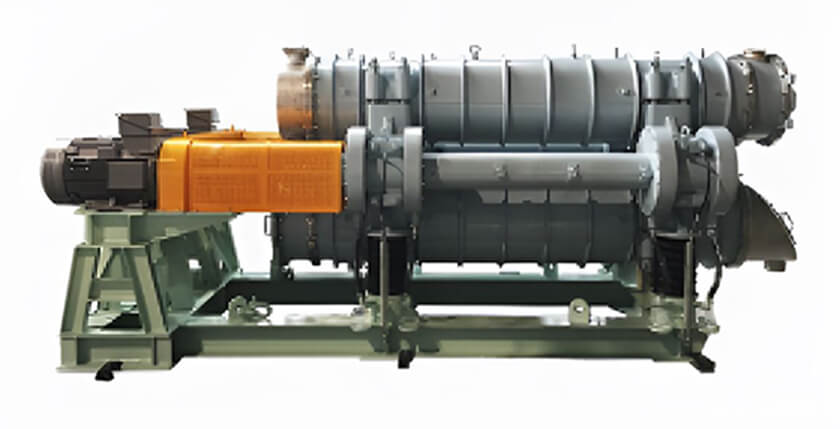
Source: CHUO KAKOHKI official website (https://chuokakohki.com/products/mills)
Grinding Capabilities
Its proprietary low-frequency, high-amplitude design generates high-G impact force, reducing difficult-to-grind materials such as SiC to submicron sizes in a short time. Material-contact parts can be made metal-free, supporting mass production of high-purity electronic materials.
Maintenance
When bearing replacement is required, the vibrator unit can be swapped with a spare, allowing operation to resume quickly with minimal downtime.
- Pot Volume
- 17.2–803.2 gal (65–3,040 L)
- Media
- Steel, stainless steel, alumina, nylon
- Lining
- Steel, stainless steel, alumina, zirconia, rubber (polyurethane, NBR), nylon
- Process Type
- Dry / Wet
- Operation Mode
- Continuous
- Laboratory
Test Model - Available
Show More
For Uniform Particle Size
Distribution from the Grinding Stage
Distribution from the Grinding Stage
Vibro-Energy Grinding Mill
SWECO
SWECO
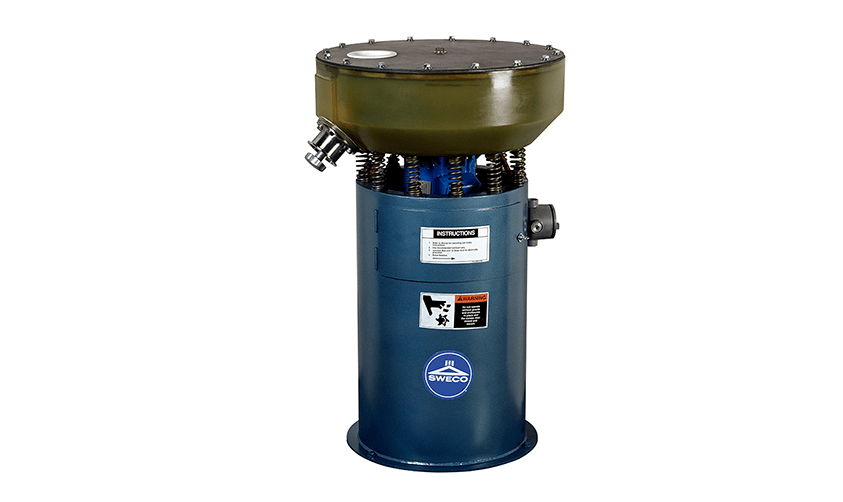
Image: fine-mill-finder.com (https://www.fine-mill-finder.com/wp/wp-content/uploads/500-grinding-mill-dm1.jpg)
Grinding Capabilities
SWECO's proprietary Vibro-Energy motion densely packs cylindrical media to maximize contact between media surfaces. This makes it easier to precisely control particle size and distribution, so particle size can be made uniform at the grinding stage.
Maintenance Support
Few moving parts help keep maintenance costs low, and abrasion-resistant linings can be replaced. SWECO also supplies grinding mill parts and accessories, including media and linings, to support ongoing maintenance.
- Pot Volume
- High-amplitude: 9.5–510.9 gal (36–1,934 L); low-amplitude: 0.7–845.4 gal (2.7–3,200 L)
- Media
- Cylindrical grinding media; media available from SWECO
- Lining
- Abrasion-resistant metal, ceramic, or elastomer
- Process Type
- High-amplitude: Dry / Wet; low-amplitude: Wet
- Operation Mode
- Not specified on the official website
- Laboratory
Test Model - Grinding pots available for smaller lab-size units
Show More
For Recycling
Hard-to-Process Waste
Hard-to-Process Waste
Eccentric Vibrating Mill
SIEBTECHNIK TEMA
SIEBTECHNIK TEMA
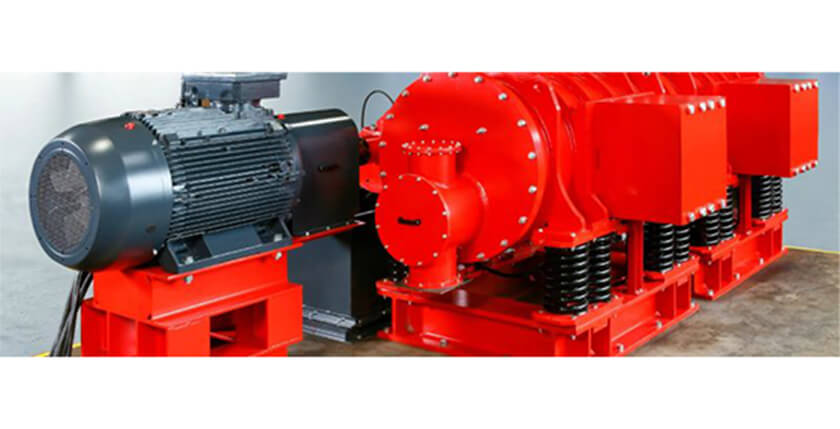
Source: SIEBTECHNIK TEMA official website (https://www.siebtechnik-tema.com/unit_operation/eccentric-vibrating-mills/)
Grinding Capabilities
Its eccentric design positions the exciter away from the center of gravity, generating strong impact forces and frictional heat. It can recycle scrap such as cemented-carbide drills and process asbestos into fiber-free raw material.
Maintenance
For easier maintenance, the main drive components are located outside the grinding cylinder, reducing the work required for inspections and parts replacement.
- Pot Volume
- 2.9–502.5 gal (11–1,902 L)
- Media
- Steel, cemented carbide, ceramic, and more
- Lining
- Special steel, ceramic, rubberized
- Process Type
- Not specified on the official website
- Operation Mode
- Continuous / Batch / Automated Batch
- Laboratory
Test Model - Available
Show More
*Source: SWECO Official Website (https://sweco.com/separation/grinding-mill.php)
*Source: SWECO Official Website [PDF] (https://sweco.com/addinfo/Grinding-Mills.pdf)
*Source: SIEBTECHNIK TEMA Official Website (https://www.siebtechnik-tema.com/unit_operation/eccentric-vibrating-mills/)
*Source: SIEBTECHNIK TEMA Official Website [PDF] (https://www.siebtechnik-tema.com/wp-content/uploads/2023/03/wb238e_Exzenterschwing_2025-1.pdf)