
The Vibratory Mill Selection Guide for Advanced Industries » Vibratory Mills by Material » Vibratory Mill for Glass Slurry
Vibratory Mill for Glass Slurry
Ceramic glaze and frit slurry production depends on reaching a specific particle fineness and keeping the mixture evenly suspended, not simply grinding glass as fine as possible, and the wet milling step is often the slowest part of a tile or ceramic production line. This article explains why vibratory mills speed up glass frit wet milling, how particle size affects the finished glaze, and how to keep a slurry stable through the milling process.
Why Vibratory Mills Speed Up Glass Frit Wet Milling
Ceramics producers have traditionally wet-milled glass frit with water, clay, and other glaze ingredients in rotary ball mills, a process that can take hours to reach the fineness a glaze formulation requires.
Vibratory mills apply higher-frequency impact than a rotating drum delivers, which reaches the same target fineness and sieve residue specification in a fraction of the milling time a conventional ball mill needs.
Controlling Particle Size for Glaze Flow and Finish
Frit particle size shapes how a glaze behaves during firing: finer particles promote smoother flow and a glossier finish, while coarser residue left in the slurry can show up as surface defects once the glaze is fired onto the ceramic body.
Sieve residue, the percentage of material that doesn't pass through a specified mesh, is the standard quality checkpoint ceramics producers use to confirm a batch is ready. Vibratory mills let you dial in milling time and impact intensity to consistently hit that residue target rather than over- or under-milling individual batches.
Slurry Stability and Suspension During Milling
A glaze slurry has to stay evenly suspended through milling, storage, and application, since settling separates the frit, clay, and other additives and leaves the slurry's composition inconsistent batch to batch.
Finer, more uniform particle size distribution improves suspension stability on its own, and vibratory milling disperses additives like clay more evenly through the batch at the same time it reduces frit particle size, rather than requiring a separate mixing step afterward.
Continuous Processing for High-Volume Tile
and Ceramic Lines
Tile and ceramic tableware manufacturing runs on continuous production lines, and a batch milling process that can't keep pace becomes the bottleneck for everything downstream.
A continuous-type vibratory mill matches glaze slurry output to the steady throughput a production line actually needs, rather than forcing the line to wait on batch-by-batch milling cycles sized for smaller-scale operations.
Applications in Tile, Sanitaryware,
and Tableware Glazing
Ceramic tile manufacturers mill glass frit into the glaze slurries applied before firing to give tiles their color, gloss, and surface finish. Sanitaryware producers rely on the same wet-milled frit for the smooth, durable glaze coating on sinks, toilets, and bathroom fixtures.
Tableware and dinnerware manufacturers use finely milled frit slurries for food-safe glazes that need a consistent, defect-free finish across large production volumes.
Selecting a Vibratory Mill for Glass Slurry Milling
Glass slurry milling succeeds on hitting a target fineness and sieve residue quickly while keeping the batch evenly suspended, not on milling time alone. Vibratory mills address this through high-frequency impact that cuts milling time, consistent particle size control for predictable glaze quality, and continuous-duty options that keep pace with production line output.
CHECK
Find the Right Vibratory Mill
for Your Material
for Your Material
The right vibratory mill varies depending on the difficult-to-grind material, such as SiC or fine ceramics.
This article reviews the specifications of vibratory mills for mass production and their industry-specific applications. It compares vibratory mills suited to each material based on differences in available lining materials, grinding media, and processing capacity. Please refer to this article when selecting the right grinding machine.
3 Recommended Vibratory Mills
by Grinding Goal
by Grinding Goal
Even with the same material, the right vibratory mill depends on what you need to achieve: fine grinding hard materials at high purity, making the particle size distribution uniform from the grinding stage, or recycling hard-to-process waste. Below are three manufacturers, each matched to a different grinding goal.
For High-Purity Fine Grinding
of Hard Materials
of Hard Materials
Model CD Vibration Mill
CHUO KAKOHKI
CHUO KAKOHKI
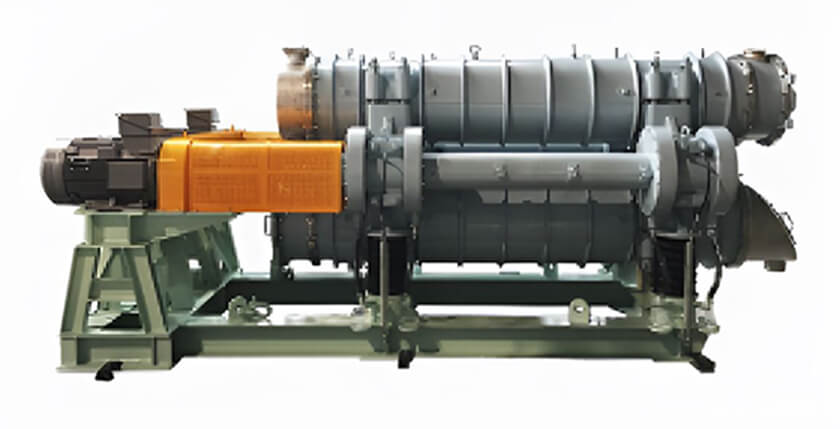
Source: CHUO KAKOHKI official website (https://chuokakohki.com/products/mills)
Grinding Capabilities
Its proprietary low-frequency, high-amplitude design generates high-G impact force, reducing difficult-to-grind materials such as SiC to submicron sizes in a short time. Material-contact parts can be made metal-free, supporting mass production of high-purity electronic materials.
Maintenance
When bearing replacement is required, the vibrator unit can be swapped with a spare, allowing operation to resume quickly with minimal downtime.
- Pot Volume
- 17.2–803.2 gal (65–3,040 L)
- Media
- Steel, stainless steel, alumina, nylon
- Lining
- Steel, stainless steel, alumina, zirconia, rubber (polyurethane, NBR), nylon
- Process Type
- Dry / Wet
- Operation Mode
- Continuous
- Laboratory
Test Model - Available
Show More
For Uniform Particle Size
Distribution from the Grinding Stage
Distribution from the Grinding Stage
Vibro-Energy Grinding Mill
SWECO
SWECO
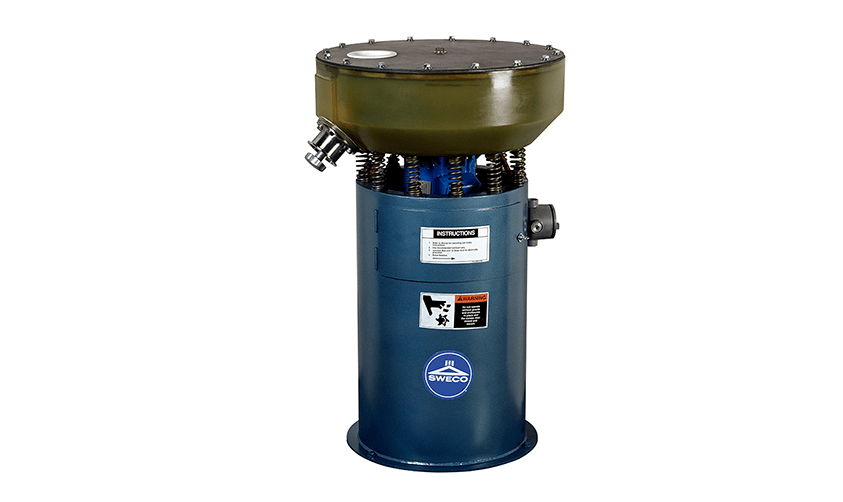
Image: fine-mill-finder.com (https://www.fine-mill-finder.com/wp/wp-content/uploads/500-grinding-mill-dm1.jpg)
Grinding Capabilities
SWECO's proprietary Vibro-Energy motion densely packs cylindrical media to maximize contact between media surfaces. This makes it easier to precisely control particle size and distribution, so particle size can be made uniform at the grinding stage.
Maintenance Support
Few moving parts help keep maintenance costs low, and abrasion-resistant linings can be replaced. SWECO also supplies grinding mill parts and accessories, including media and linings, to support ongoing maintenance.
- Pot Volume
- High-amplitude: 9.5–510.9 gal (36–1,934 L); low-amplitude: 0.7–845.4 gal (2.7–3,200 L)
- Media
- Cylindrical grinding media; media available from SWECO
- Lining
- Abrasion-resistant metal, ceramic, or elastomer
- Process Type
- High-amplitude: Dry / Wet; low-amplitude: Wet
- Operation Mode
- Not specified on the official website
- Laboratory
Test Model - Grinding pots available for smaller lab-size units
Show More
For Recycling
Hard-to-Process Waste
Hard-to-Process Waste
Eccentric Vibrating Mill
SIEBTECHNIK TEMA
SIEBTECHNIK TEMA
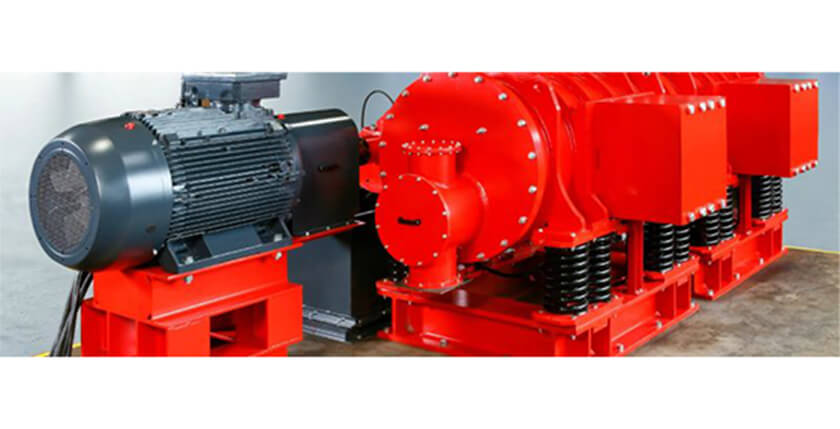
Source: SIEBTECHNIK TEMA official website (https://www.siebtechnik-tema.com/unit_operation/eccentric-vibrating-mills/)
Grinding Capabilities
Its eccentric design positions the exciter away from the center of gravity, generating strong impact forces and frictional heat. It can recycle scrap such as cemented-carbide drills and process asbestos into fiber-free raw material.
Maintenance
For easier maintenance, the main drive components are located outside the grinding cylinder, reducing the work required for inspections and parts replacement.
- Pot Volume
- 2.9–502.5 gal (11–1,902 L)
- Media
- Steel, cemented carbide, ceramic, and more
- Lining
- Special steel, ceramic, rubberized
- Process Type
- Not specified on the official website
- Operation Mode
- Continuous / Batch / Automated Batch
- Laboratory
Test Model - Available
Show More
*Source: SWECO Official Website (https://sweco.com/separation/grinding-mill.php)
*Source: SWECO Official Website [PDF] (https://sweco.com/addinfo/Grinding-Mills.pdf)
*Source: SIEBTECHNIK TEMA Official Website (https://www.siebtechnik-tema.com/unit_operation/eccentric-vibrating-mills/)
*Source: SIEBTECHNIK TEMA Official Website [PDF] (https://www.siebtechnik-tema.com/wp-content/uploads/2023/03/wb238e_Exzenterschwing_2025-1.pdf)