
The Vibratory Mill Selection Guide for Advanced Industries » Vibratory Mills by Material » Vibratory Mill for Tungsten Carbide
Vibratory Mill for Tungsten Carbide
Tungsten carbide's extreme hardness is what makes it valuable for cutting tools and wear parts, and that same hardness applies whether you're producing new WC-Co powder or reclaiming it from scrap and worn-out tooling. The cobalt binder adds a worker-safety dimension that most ceramic or metal grinding doesn't carry. This article explains how vibratory mills handle tungsten carbide's hardness, support cost-effective reclamation, and contain the cobalt dust that grinding releases.
Why Vibratory Mills Handle Tungsten Carbide's Extreme Hardness
Tungsten carbide ranks among the hardest materials used in industrial manufacturing, hard enough that conventional ball mills take impractically long cycle times to reduce it to a workable particle size.
Vibratory mills apply sustained high-frequency impact well beyond what a rotating drum delivers, which is what makes them one of the few grinding technologies that can process tungsten carbide in a practical timeframe rather than days.
Reclaiming Tungsten Carbide from Scrap and Worn Tooling
Worn cutting inserts, drill bits, and other spent tungsten carbide tooling still contain valuable tungsten and cobalt, and reclaiming that material is often cheaper than sourcing new WC-Co powder from ore.
Recyclers processing this scrap need equipment built for continuous, high-volume operation rather than small specialty batches. A continuous-type vibratory mill sized for sustained tonnage matches the throughput scrap recyclers actually need, rather than the lab-scale batch processing suited to new material development.
Containing Cobalt Dust During Grinding
The cobalt binder that holds tungsten carbide together is also the source of a recognized occupational risk: hard metal lung disease, a rare but serious interstitial lung condition documented in workers who grind or manufacture WC-Co materials. Research has traced cases specifically to cobalt released during grinding, not to tungsten carbide or cobalt in isolation.
Keeping grinding dust out of the shop air is the primary control. A fully sealed grinding chamber contains cobalt-bearing dust at the source, rather than relying entirely on separate ventilation and respiratory protection to manage exposure after the fact.
Managing Wear on Equipment Processing the Hardest Materials
Grinding a material this hard wears down standard linings quickly, and a lining that degrades unevenly changes particle size output without warning.
Matching lining and media to sustained tungsten carbide processing keeps this predictable. Durable, wear-resistant linings built for continuous high-hardness operation hold up longer here than linings selected primarily for chemical purity, since tungsten carbide processing is driven by abrasion resistance rather than contamination sensitivity.
Applications in Cutting Tools and Wear-Resistant Components
Cutting tool manufacturers grind new WC-Co powder into inserts, drill bits, and mill cutters that hold a sharp edge through high-speed machining. Mining and construction equipment makers use the same hard, wear-resistant material for drill tips and wear plates exposed to constant abrasion.
Carbide recyclers close the loop by reclaiming tungsten and cobalt from end-of-life tooling, supporting a supply chain less dependent on newly mined tungsten, which carries its own sourcing and cost pressures.
Selecting a Vibratory Mill for Tungsten Carbide Processing
Tungsten carbide processing has to solve for hardness, throughput, and worker safety at the same time, whether the material is virgin powder or reclaimed scrap. Vibratory mills address all three through high-frequency impact capable of grinding the hardest industrial materials, continuous-duty options sized for recycling volumes, and sealed chambers that keep cobalt dust contained.
CHECK
Find the Right Vibratory Mill
for Your Material
for Your Material
The right vibratory mill varies depending on the difficult-to-grind material, such as SiC or fine ceramics.
This article reviews the specifications of vibratory mills for mass production and their industry-specific applications. It compares vibratory mills suited to each material based on differences in available lining materials, grinding media, and processing capacity. Please refer to this article when selecting the right grinding machine.
3 Recommended Vibratory Mills
by Grinding Goal
by Grinding Goal
Even with the same material, the right vibratory mill depends on what you need to achieve: fine grinding hard materials at high purity, making the particle size distribution uniform from the grinding stage, or recycling hard-to-process waste. Below are three manufacturers, each matched to a different grinding goal.
For High-Purity Fine Grinding
of Hard Materials
of Hard Materials
Model CD Vibration Mill
CHUO KAKOHKI
CHUO KAKOHKI
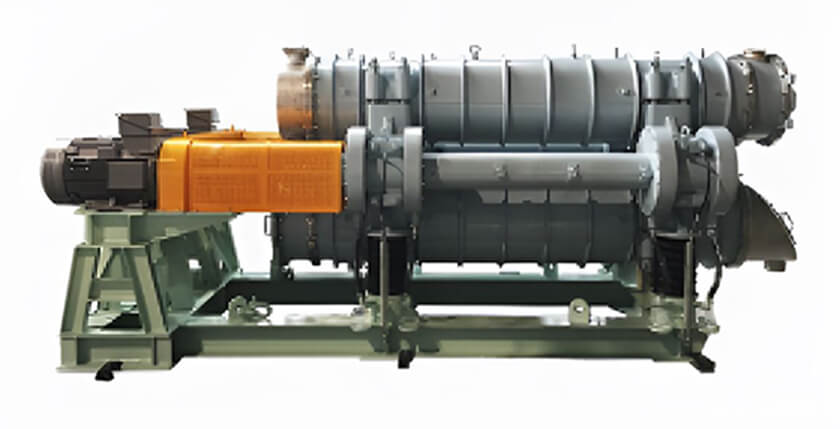
Source: CHUO KAKOHKI official website (https://chuokakohki.com/products/mills)
Grinding Capabilities
Its proprietary low-frequency, high-amplitude design generates high-G impact force, reducing difficult-to-grind materials such as SiC to submicron sizes in a short time. Material-contact parts can be made metal-free, supporting mass production of high-purity electronic materials.
Maintenance
When bearing replacement is required, the vibrator unit can be swapped with a spare, allowing operation to resume quickly with minimal downtime.
- Pot Volume
- 17.2–803.2 gal (65–3,040 L)
- Media
- Steel, stainless steel, alumina, nylon
- Lining
- Steel, stainless steel, alumina, zirconia, rubber (polyurethane, NBR), nylon
- Process Type
- Dry / Wet
- Operation Mode
- Continuous
- Laboratory
Test Model - Available
Show More
For Uniform Particle Size
Distribution from the Grinding Stage
Distribution from the Grinding Stage
Vibro-Energy Grinding Mill
SWECO
SWECO
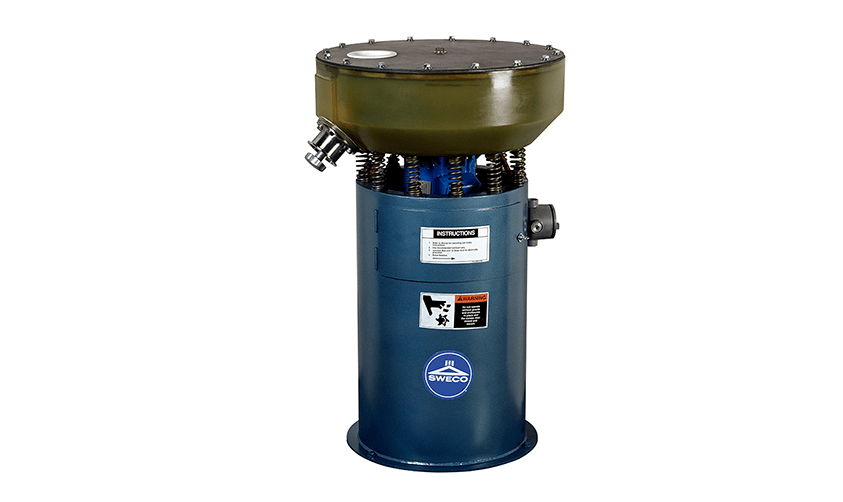
Image: fine-mill-finder.com (https://www.fine-mill-finder.com/wp/wp-content/uploads/500-grinding-mill-dm1.jpg)
Grinding Capabilities
SWECO's proprietary Vibro-Energy motion densely packs cylindrical media to maximize contact between media surfaces. This makes it easier to precisely control particle size and distribution, so particle size can be made uniform at the grinding stage.
Maintenance Support
Few moving parts help keep maintenance costs low, and abrasion-resistant linings can be replaced. SWECO also supplies grinding mill parts and accessories, including media and linings, to support ongoing maintenance.
- Pot Volume
- High-amplitude: 9.5–510.9 gal (36–1,934 L); low-amplitude: 0.7–845.4 gal (2.7–3,200 L)
- Media
- Cylindrical grinding media; media available from SWECO
- Lining
- Abrasion-resistant metal, ceramic, or elastomer
- Process Type
- High-amplitude: Dry / Wet; low-amplitude: Wet
- Operation Mode
- Not specified on the official website
- Laboratory
Test Model - Grinding pots available for smaller lab-size units
Show More
For Recycling
Hard-to-Process Waste
Hard-to-Process Waste
Eccentric Vibrating Mill
SIEBTECHNIK TEMA
SIEBTECHNIK TEMA
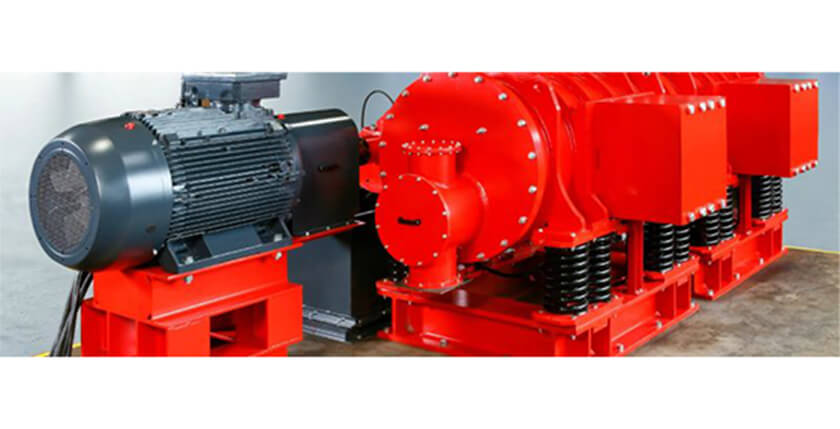
Source: SIEBTECHNIK TEMA official website (https://www.siebtechnik-tema.com/unit_operation/eccentric-vibrating-mills/)
Grinding Capabilities
Its eccentric design positions the exciter away from the center of gravity, generating strong impact forces and frictional heat. It can recycle scrap such as cemented-carbide drills and process asbestos into fiber-free raw material.
Maintenance
For easier maintenance, the main drive components are located outside the grinding cylinder, reducing the work required for inspections and parts replacement.
- Pot Volume
- 2.9–502.5 gal (11–1,902 L)
- Media
- Steel, cemented carbide, ceramic, and more
- Lining
- Special steel, ceramic, rubberized
- Process Type
- Not specified on the official website
- Operation Mode
- Continuous / Batch / Automated Batch
- Laboratory
Test Model - Available
Show More
*Source: SWECO Official Website (https://sweco.com/separation/grinding-mill.php)
*Source: SWECO Official Website [PDF] (https://sweco.com/addinfo/Grinding-Mills.pdf)
*Source: SIEBTECHNIK TEMA Official Website (https://www.siebtechnik-tema.com/unit_operation/eccentric-vibrating-mills/)
*Source: SIEBTECHNIK TEMA Official Website [PDF] (https://www.siebtechnik-tema.com/wp-content/uploads/2023/03/wb238e_Exzenterschwing_2025-1.pdf)