
The Vibratory Mill Selection Guide for Advanced Industries » Vibratory Mills by Material » Vibratory Mill for Metal Powder
Vibratory Mill for Metal Powder
Metal and metallic powder processing covers two very different transformations: forcing dissimilar metals to combine at the particle level when melting them together isn't an option, and flattening round particles into thin, uniform flakes. This article explains how vibratory mills handle both, along with the oxidation and contamination control that battery-grade and electronic-grade powder demands.
Why Vibratory Mills Suit Metal and Metallic Powder Processing
Both alloying and particle shaping rely on the same underlying mechanism: repeated mechanical impact strong enough to change a metal particle's structure without melting it.
Vibratory mills deliver this through sustained high-frequency impact rather than the slower, less frequent collisions of a rotating ball mill, which is what makes them suited to metal and metallic powder work where the goal is combining or reshaping particles rather than simply breaking them down in size.
Mechanical Alloying Metals That Won't Combine by Melting
Some next-generation battery and advanced material formulations call for combining metals with melting points too far apart to alloy conventionally in a furnace. Mechanical alloying solves this differently: repeated impact welds and fractures particles together at the solid state until the elements are mixed at the atomic level.
A standard ball mill often lacks the impact force to drive this reaction to completion in a practical timeframe. Vibratory mills apply stronger, more frequent impact energy, which pushes the alloying process further and faster than gentler grinding methods can manage.
Oxidation and Contamination Control for Battery-Grade Powder
Extended processing time exposes reactive metal powders to oxygen, and oxidation during alloying can degrade the electrochemical properties a battery material depends on. Processing under an inert atmosphere such as argon or nitrogen keeps this in check.
Iron contamination carries its own risk in battery applications: even trace metallic iron introduced during processing can later cause an internal short circuit once the material is built into a cell. A sealed vibratory mill with inert gas purging and lining matched to the material addresses both risks in the same process, rather than requiring separate equipment for atmosphere control and contamination control.
Flattening Spherical Powder Into Conductive Flakes
Electronic component, paint, and conductive paste manufacturers need the opposite transformation from alloying: taking round metal powders such as silver, copper, or aluminum and flattening them into thin, flake-shaped particles without shattering them.
A standard grinding mill tends to fracture particles rather than deform them, which works against this goal. Vibratory mills can be tuned toward deforming rather than breaking particles, and controlling impact intensity and processing time keeps flake thickness and aspect ratio consistent from batch to batch, which conductive paste formulations depend on for uniform conductivity.
Applications in Next-Generation Batteries and Electronics
Battery material developers use mechanical alloying to create novel electrode and alloy compositions that aren't available as pre-made powders, particularly when working with combinations that conventional melting can't produce. Electronic component manufacturers rely on flake-shaped metal powders for conductive pastes used in solar cell contacts, printed electronics, and multilayer ceramic capacitor terminations.
Paint and coating producers use the same flake-shaped aluminum and copper powders for metallic pigments, where flake thickness and surface area directly affect the finish and conductivity of the final product.
Selecting a Vibratory Mill for Metal and Metallic Powder Work
Metal and metallic powder processing succeeds on matching the equipment to the transformation you actually need, whether that's forcing incompatible metals to alloy or reshaping particles without fracturing them. Vibratory mills support both through adjustable impact intensity, sealed inert-gas processing for reactive and contamination-sensitive materials, and the control needed to hit a consistent particle shape batch after batch.
CHECK
Find the Right Vibratory Mill
for Your Material
for Your Material
The right vibratory mill varies depending on the difficult-to-grind material, such as SiC or fine ceramics.
This article reviews the specifications of vibratory mills for mass production and their industry-specific applications. It compares vibratory mills suited to each material based on differences in available lining materials, grinding media, and processing capacity. Please refer to this article when selecting the right grinding machine.
3 Recommended Vibratory Mills
by Grinding Goal
by Grinding Goal
Even with the same material, the right vibratory mill depends on what you need to achieve: fine grinding hard materials at high purity, making the particle size distribution uniform from the grinding stage, or recycling hard-to-process waste. Below are three manufacturers, each matched to a different grinding goal.
For High-Purity Fine Grinding
of Hard Materials
of Hard Materials
Model CD Vibration Mill
CHUO KAKOHKI
CHUO KAKOHKI
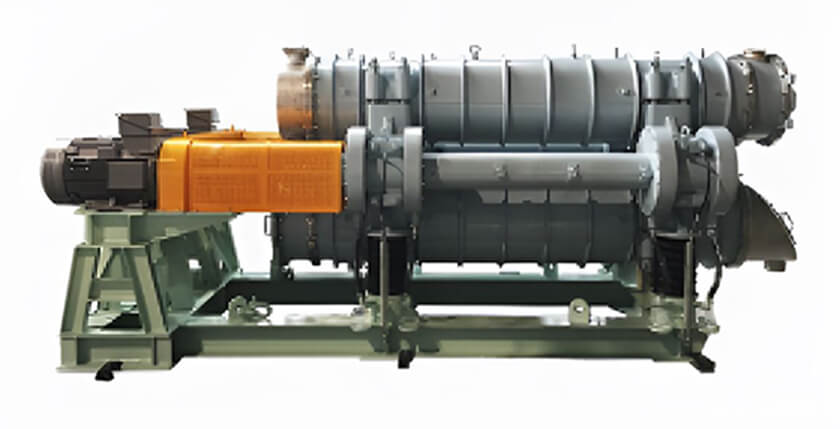
Source: CHUO KAKOHKI official website (https://chuokakohki.com/products/mills)
Grinding Capabilities
Its proprietary low-frequency, high-amplitude design generates high-G impact force, reducing difficult-to-grind materials such as SiC to submicron sizes in a short time. Material-contact parts can be made metal-free, supporting mass production of high-purity electronic materials.
Maintenance
When bearing replacement is required, the vibrator unit can be swapped with a spare, allowing operation to resume quickly with minimal downtime.
- Pot Volume
- 17.2–803.2 gal (65–3,040 L)
- Media
- Steel, stainless steel, alumina, nylon
- Lining
- Steel, stainless steel, alumina, zirconia, rubber (polyurethane, NBR), nylon
- Process Type
- Dry / Wet
- Operation Mode
- Continuous
- Laboratory
Test Model - Available
Show More
For Uniform Particle Size
Distribution from the Grinding Stage
Distribution from the Grinding Stage
Vibro-Energy Grinding Mill
SWECO
SWECO
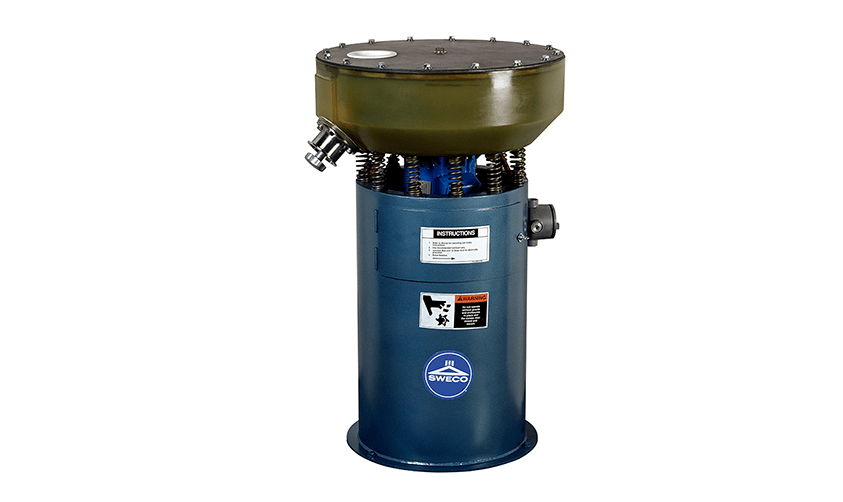
Image: fine-mill-finder.com (https://www.fine-mill-finder.com/wp/wp-content/uploads/500-grinding-mill-dm1.jpg)
Grinding Capabilities
SWECO's proprietary Vibro-Energy motion densely packs cylindrical media to maximize contact between media surfaces. This makes it easier to precisely control particle size and distribution, so particle size can be made uniform at the grinding stage.
Maintenance Support
Few moving parts help keep maintenance costs low, and abrasion-resistant linings can be replaced. SWECO also supplies grinding mill parts and accessories, including media and linings, to support ongoing maintenance.
- Pot Volume
- High-amplitude: 9.5–510.9 gal (36–1,934 L); low-amplitude: 0.7–845.4 gal (2.7–3,200 L)
- Media
- Cylindrical grinding media; media available from SWECO
- Lining
- Abrasion-resistant metal, ceramic, or elastomer
- Process Type
- High-amplitude: Dry / Wet; low-amplitude: Wet
- Operation Mode
- Not specified on the official website
- Laboratory
Test Model - Grinding pots available for smaller lab-size units
Show More
For Recycling
Hard-to-Process Waste
Hard-to-Process Waste
Eccentric Vibrating Mill
SIEBTECHNIK TEMA
SIEBTECHNIK TEMA
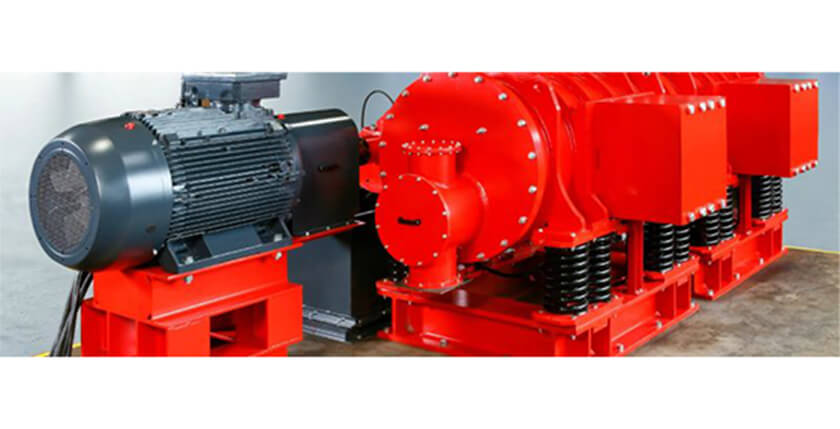
Source: SIEBTECHNIK TEMA official website (https://www.siebtechnik-tema.com/unit_operation/eccentric-vibrating-mills/)
Grinding Capabilities
Its eccentric design positions the exciter away from the center of gravity, generating strong impact forces and frictional heat. It can recycle scrap such as cemented-carbide drills and process asbestos into fiber-free raw material.
Maintenance
For easier maintenance, the main drive components are located outside the grinding cylinder, reducing the work required for inspections and parts replacement.
- Pot Volume
- 2.9–502.5 gal (11–1,902 L)
- Media
- Steel, cemented carbide, ceramic, and more
- Lining
- Special steel, ceramic, rubberized
- Process Type
- Not specified on the official website
- Operation Mode
- Continuous / Batch / Automated Batch
- Laboratory
Test Model - Available
Show More
*Source: SWECO Official Website (https://sweco.com/separation/grinding-mill.php)
*Source: SWECO Official Website [PDF] (https://sweco.com/addinfo/Grinding-Mills.pdf)
*Source: SIEBTECHNIK TEMA Official Website (https://www.siebtechnik-tema.com/unit_operation/eccentric-vibrating-mills/)
*Source: SIEBTECHNIK TEMA Official Website [PDF] (https://www.siebtechnik-tema.com/wp-content/uploads/2023/03/wb238e_Exzenterschwing_2025-1.pdf)