
The Vibratory Mill Selection Guide for Advanced Industries » Vibratory Mills by Material » Vibratory Mill for Battery Electrode Materials
Vibratory Mill for Battery Electrode Materials
Cathode and anode active materials often need a uniform surface coating, most commonly carbon, to reach the conductivity and cycle life a finished battery cell depends on. This article explains why vibratory mills suit dry particle coating, how coating uniformity affects battery performance, and how to scale a coating process from lab validation to production volume without overspending on contamination control a cost-sensitive chemistry does not need.
Why Vibratory Mills Suit Dry Particle Coating
Coating an active material particle with carbon can be done in a solvent-based slurry, but that adds a drying step and a chance for the coating to redistribute unevenly as the solvent evaporates.
Vibratory mills apply repeated mechanical impact and shear directly to a dry powder mixture, which fuses a thin carbon layer onto each particle without solvent, skipping the drying step and the uneven redistribution that can come with it.
Coating Uniformity and Cycle Life
An unevenly coated particle creates a hot spot where current concentrates during charging and discharging, and that uneven current distribution is what drives capacity fade over repeated cycles faster than the material's chemistry alone would predict.
Vibratory mills give you control over coating uniformity through processing time and impact intensity, and consistent coating thickness across the full batch is what keeps cell-to-cell performance predictable at production scale rather than only in a small validated sample.
Cost-Effective Contamination Control
for Cost-Sensitive Chemistries
Lithium iron phosphate already contains iron as part of its crystal structure, but that is chemically distinct from the metallic iron particles that can enter a batch during grinding. Free metallic iron behaves differently: it can oxidize and redeposit as dendrites during charge cycles, creating a short circuit that the iron bonded inside the LFP compound does not cause.
Vibratory mills let you match lining investment to the actual specification: urethane linings block metallic iron and other wear-related contamination at a fraction of the cost of ceramic alternatives, which fits chemistries where keeping metallic particles out matters more than reaching the ultra-high purity semiconductor-grade materials require.
Scaling from Lab Validation to Production Volume
A coating process proven on a small lab batch still has to be confirmed at a scale that resembles actual production before a battery maker commits to full-volume manufacturing.
A validation-scale vibratory mill in the 50 to 100-liter range bridges this gap, letting a battery developer confirm coating consistency at a volume that simulates future ton-per-month production before ordering equipment sized for full manufacturing output.
Applications in Cathode and Anode Material Production
Lithium iron phosphate cathode producers apply carbon coating to compensate for the material's naturally low conductivity, a step that has become standard practice across the chemistry. Nickel manganese cobalt cathode makers use similar dry coating processes to improve rate performance and structural stability during cycling.
Silicon-carbon composite anode developers rely on the same dry coating approach to buffer the volume expansion silicon undergoes during charging, a challenge that carbon-coated graphite alone does not face.
Selecting a Vibratory Mill for Electrode Material Coating
Electrode material coating succeeds on uniformity and fails on cost if contamination control is set higher than the chemistry actually needs. Vibratory mills address both: dry mechanical coating keeps thickness consistent across a batch, and lining options scaled to the chemistry keep cost-sensitive production from paying for purity it does not require.
CHECK
Find the Right Vibratory Mill
for Your Material
for Your Material
The right vibratory mill varies depending on the difficult-to-grind material, such as SiC or fine ceramics.
This article reviews the specifications of vibratory mills for mass production and their industry-specific applications. It compares vibratory mills suited to each material based on differences in available lining materials, grinding media, and processing capacity. Please refer to this article when selecting the right grinding machine.
3 Recommended Vibratory Mills
by Material
by Material
Grinding Hard Metals
and Ceramics
For Electronic Materials and
Semiconductor Materials
and Ceramics
For Electronic Materials and
Semiconductor Materials
Model CD Vibration Mill
CHUO KAKOHKI
CHUO KAKOHKI
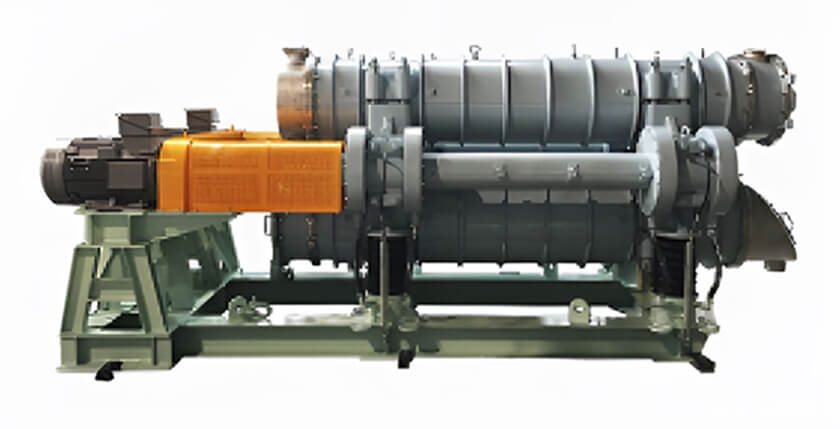
Source: CHUO KAKOHKI Official Website
(https://chuokakohki.com/products/mills)
Grinding Features
Designed for submicron grinding of advanced ceramics and electronic materials, including hard-to-grind SiC, with metal-free configuration options for high-purity processing. High-G impact energy enables both submicron grinding and mechanochemical processing, supporting advanced material development and alloy synthesis.
Maintenance Features
Unavoidable bearing replacement can be completed by simply swapping in a spare vibrator unit. This allows operation to resume quickly with minimal downtime.
- Pot Volume
- 17.2–803.2 gal (65–3,040 L)
- Media
- Steel, stainless steel, alumina, nylon
- Lining
- Steel, stainless steel, alumina, zirconia, rubber (polyurethane, NBR), nylon
- Process Type
- Dry / wet
- Operation Mode
- Continuous
- Laboratory
Test Model - Available
Show More
Grinding Battery Materials
and Carbon
For EV and
Energy Storage Production
and Carbon
For EV and
Energy Storage Production
Heavy-duty Vibration Grinders
Xiamen Tmax Battery Equipments
Xiamen Tmax Battery Equipments
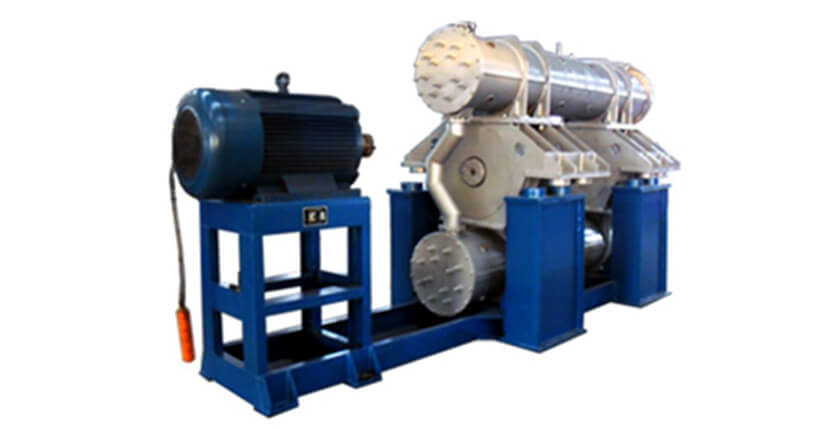
Source: TMAX Official Website
(https://www.tmaxcn.com/heavy-duty-vibration-grinder-for-large-scale-production_p3540.html)
Grinding Features
Supports contamination-controlled grinding for battery materials using low-cost metal-free liner and media options. Polyurethane lining combined with ceramic media such as alumina prevents metal contamination without the need for expensive ceramic liners.
Maintenance Features
It includes unlimited online technical support, helping users build a self-maintenance and servicing system while receiving technical guidance from the manufacturer.
- Pot Volume
- 26.4–317.0 gal (100–1,200 L)
- Media
- Zirconia, alumina, silicon nitride, agate, crystal glass, stainless steel, tungsten, high-wear-resistant steel, manganese steel, carbon steel, hard metal, cemented carbide, polyurethane balls, nylon, and more
- Lining
- Stainless steel, ceramic, zirconia, glazed block, nylon, PTFE, food-standard rubber, polyurethane
- Process Type
- Dry / wet
- Operation Mode
- Continuous
- Laboratory
Test Model - Available
Show More
Grinding Hard Scrap
and Industrial Waste
For Industrial Recycling and
Waste Processing
and Industrial Waste
For Industrial Recycling and
Waste Processing
Eccentric Vibrating Mills
SIEBTECHNIK TEMA
SIEBTECHNIK TEMA
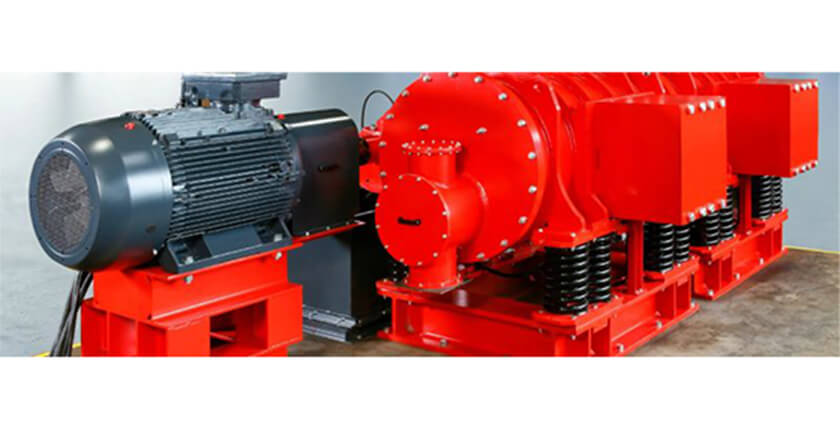
Source: SIEBTECHNIK TEMA Official Website
(https://www.siebtechnik-tema.com/unit_operation/eccentric-vibrating-mills/)
Grinding Features
Built for heavy-duty grinding of hard scrap and difficult industrial materials, including carbide waste and asbestos processing. It enables efficient recycling of tungsten and cemented carbide, and uses impact and heat to break down asbestos into fiber-free raw material.
Maintenance Features
For easier maintenance, the main drive components are installed outside the grinding cylinder, reducing the labor required for inspection and parts replacement.
- Pot Volume
- 2.9–502.5 gal (11–1,902 L)
- Media
- Steel, cemented carbide, ceramic, and more
- Lining
- Special steel, ceramic, rubberized
- Process Type
- Not specified on the official website
- Operation Mode
- Continuous / batch / automated batch
- Laboratory
Test Model - Available
Show More
*Source: TMAX Official Website (https://www.tmaxcn.com/1-100l-optional-vibrating-ball-mill-machine_p1778.html)
*Source: SIEBTECHNIK TEMA Official Website (https://www.siebtechnik-tema.com/unit_operation/eccentric-vibrating-mills/)
*Source: SIEBTECHNIK TEMA Official Website [PDF] (https://www.siebtechnik-tema.com/wp-content/uploads/2023/03/wb238e_Exzenterschwing_2025-1.pdf)
*Source: SIEBTECHNIK TEMA Official Website (https://www.siebtechnik-tema.com/unit_operation/eccentric-vibrating-mills/)
*Source: SIEBTECHNIK TEMA Official Website [PDF] (https://www.siebtechnik-tema.com/wp-content/uploads/2023/03/wb238e_Exzenterschwing_2025-1.pdf)